
Do you need a softener in Stow? A straight answer
Stow buys its water from the City of Akron, and the Lake Rockwell plant treats it. The city's 2024 water quality report gives hardness at about 7 grains per gallon on average, which is moderately hard. That level leaves scale, but it is not extreme, so a softener is a comfort and equipment-protection choice and not a necessity.
A softener is worth considering when
- You see white crust on faucets, showerheads and kettles
- Your water heater, especially a tankless unit, is scaling quickly
- You want softer-feeling water for bathing and laundry
- You are willing to buy salt and maintain the system
You can skip it when
- Occasional scale is easy to live with
- A yearly water heater flush covers your equipment needs
- You have a septic system and discharge is a concern
- You do not want the salt, upkeep and a drain connection
If the goal is protecting a tankless heater, compare the cost of a softener with a yearly descale on the tankless water heater page. For a tank unit, the answers in water heater repair on sediment and anode rods show what scale does to the equipment.
Softener, filter or reverse osmosis: what each does
| System | What it does | What it does not do |
|---|---|---|
| Salt-based softener | Removes hardness minerals by ion exchange | Does not filter sediment or change taste much |
| Whole-house sediment filter | Catches sand and rust flakes | Does not soften water |
| Whole-house carbon filter | Reduces chlorine taste and odor | Does not soften water |
| Under-sink reverse osmosis | Treats drinking water at one tap | Does not treat showers or laundry |
| Salt-free conditioner | Changes how scale forms on surfaces | Does not remove hardness minerals |
Stow's city water uses chlorine as its disinfectant. A carbon filter is a common choice if you dislike the taste, and it is a separate decision from softening. We make no health claims for any of these systems. Match the equipment to the problem you can see, taste or measure.
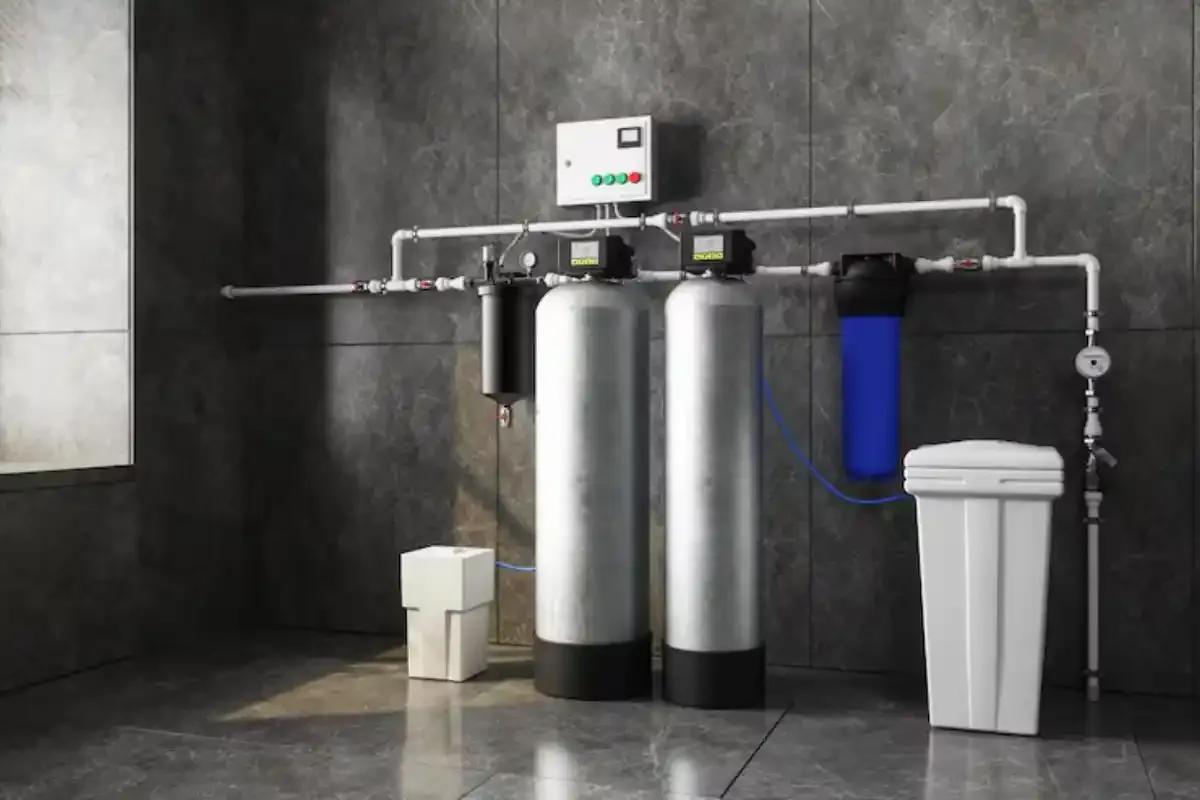
How a softener works
Resin bed
Tiny plastic beads in the main tank hold sodium. As hard water passes, calcium and magnesium swap places with the sodium.
Regeneration
When the beads fill up, the control valve flushes them with salty brine from the brine tank, then rinses the tank.
Brine tank
A plastic tank holds salt and water. Check the salt level, and break up any crust or bridge that forms.
Control valve and drain
The valve sets the schedule and sends the used brine to a drain. It needs a power outlet for the timer or meter.
Sizing and installing a softener
Capacity is rated in grains. A rough method multiplies household size by daily water use by your hardness. With about 7 grains per gallon (per the city's 2024 report), a mid-size capacity often covers a family on a weekly regeneration, though a plumber should size it for your actual home. An oversized unit wastes salt, and an undersized unit regenerates too often.
- Location: near the main water entry, with floor space for the tank and salt storage.
- Bypass valve: lets you isolate the softener for service or send untreated water to outdoor taps.
- Drain: a standpipe, laundry tub or floor drain with an air gap for the backwash line.
- Electrical: a grounded 120 V outlet within reach of the valve's transformer.
- Plumbing layout: soft water to the water heater, but outdoor faucets and irrigation usually stay untreated.
Discharge: keep it out of storm lines
Used brine belongs in an indirect drain that connects to your home's waste system, with an air gap. Do not tie it into a sump line, a downspout or a storm drain. Stow Codified Ordinance 925.01 prohibits connecting roof drains, downspouts and other storm water conveyances to the sanitary sewer, so keep the water paths separate. If your home is on septic, ask Summit Public Health and your installer first.
Softener and conditioner repair
Common faults include a failed control valve or timer, a stuck brine valve, a clogged injector, a salt bridge in the brine tank and a bad riser tube or O-ring. Resin beads wear out over many years, especially when chlorine and iron are present, and fouled resin can sometimes be cleaned. A cracked tank after a move is another cause, since tanks can be dropped in transit.
Tell the dispatcher the brand and model, the age of the unit and what it is doing, such as running out of salt, not regenerating or leaving hard water. If the system overflows from the brine tank or drain, switch the unit to bypass and call.
Brine tank cleaning
Every few years, empty the brine tank and wash out the sludge at the bottom. A tank with caked salt, a mushy bottom or a bridge of hardened salt blocks brine from reaching the resin. A plumber can clean it, check the brine well and check the float or safety valve.
How a softener visit works
Review the water and the home
The plumber asks about household size, bath count and symptoms, and may run a hardness test at the tap.
Locate the main and drain
The plumber finds where the water enters, where space and power exist and where the discharge can go.
Install or repair
For a new unit: bypass valve, connections, drain line and power. For repair: the failed valve, part or tank is replaced.
Program and test
The plumber sets the hardness and the regeneration schedule, runs a cycle and shows you how to add salt and use the bypass.
Test your tap and ask the water utility
Measure before you buy
Test strips from a hardware store give a rough hardness reading at your own tap. The City of Stow Water Department office, at 330-689-2889, is open Monday to Friday, 8:00 to 4:30. Ask it for the latest water quality report. Compare your reading with the city's 2024 average of about 7 grains per gallon.
Homes built from the 1960s through the 1990s often have older galvanized or copper supply lines. A softener does not repair old pipe, so ask the plumber to look at the supply lines when sizing the install. For related piping work, see plumbing installation, and Kent homeowners can reach us on the same line.
Want a straight answer on your water?
Call and describe your water, your system or your project. A licensed plumber is arranged, with same-day appointments when available.
Commercial water treatment usually needs an on-site look before a plan is possible. Residential jobs can be priced after the plumber sees the home.
QuestionsSoftener and filtration questions for Stow homes
Not strictly. The city's 2024 water quality report gives about 7 grains per gallon on average, which is moderately hard. A softener is a comfort and equipment-protection choice, and some homes do fine without one.
Yes. The plumber sizes the unit, sets the bypass valve, connects the drain and power and tests a regeneration cycle. Tell the dispatcher about your household and any equipment you already bought.
Often yes. Common repairs include control valves, injectors, brine valves and O-rings. Give the brand, age and symptoms to the dispatcher so the plumber can plan.
Every few years, or sooner if salt forms a hard crust or the bottom is muddy. Clean it when you see a salt bridge or if the unit stops regenerating.
Into an indirect drain with an air gap, such as a standpipe or floor drain tied to the waste system. Never to a storm line or sump discharge. Stow Codified Ordinance 925.01 prohibits storm water conveyances in the sanitary sewer.
They do different jobs. Under-sink reverse osmosis treats drinking water at one tap. A whole-house filter treats every fixture but does not soften water on its own.
Use hardness test strips at your tap, and ask the City of Stow Water Department for the latest water quality report. The 2024 report lists about 7 grains per gallon on average.