
What is different about water heaters in Stow homes
Stow buys its water from the City of Akron, which treats Upper Cuyahoga River water at the Lake Rockwell plant. The city's 2024 water quality report lists hardness at about 7 grains per gallon on average. That is moderately hard water, and it leaves scale on heating elements and the bottom of a tank, so sediment problems are common here and a yearly flush pays for itself.
Scale on elements and tank floors
Moderately hard water bakes a crust onto electric elements and burner chambers. The crust makes the unit work harder and can shorten element life, which is why we check for it on every no-hot-water visit.
Homes from the 1960s to the 1990s
Older Census data puts the median Stow home at 1980. Heaters in houses of that age often sit in basements beside a floor drain, with old shutoff valves that stick or weep when turned. Turn yours once now and then so you know it works.
Hydrant flushing and cloudy water
The city flushes hydrants and says this can temporarily change water pressure. Brief cloudiness or a pressure dip afterward is not always a heater fault, so run a cold tap for a minute before you blame the tank.
Cold winters
Northeast Ohio winters send very cold water into the heater, so weak recovery shows up in January first. A unit that barely keeps up in winter often has scale or a tired element, not a bad design.
Leaking water heater: fitting, relief valve or failed tank
Where the water appears tells most of the story. A wet inlet or outlet connection on top is usually a fitting that can be tightened or replaced. A steady drip from the temperature and pressure relief valve discharge pipe means the valve is opening because of pressure or heat, and that has its own causes.
Drip from the relief valve pipe
The copper or CPVC pipe beside the tank is dripping. Excess pressure, a failed valve or a missing expansion tank can all do this.
Wet fittings on top
Water runs down the shell from the hot or cold connection. These are often repairable with new fittings or a dielectric union.
Drain valve weeping
A slow drip at the low drain valve near the floor. Sediment can hold the valve open, and a new valve often fixes it.
Rust streaks or water at the base
Water is coming from the tank bottom or seams, and the shell is stained orange or brown. This points to a failed tank.
Puddle with a gas unit
Condensation from a high-efficiency vent or a leaking drain can look like a tank leak. A plumber can tell the two apart in minutes.
Hot, damp floor near the heater
A leak on the hot outlet pipe or a manifold nearby. The heater may be fine and the pipe is the problem.
When a leaking tank means replacement
If the water is coming from inside the tank jacket, the steel liner has corroded through. No patch or sealant holds a pressurized tank, and a heater with this failure is not repairable. A plumber will confirm the source, then walk you through replacing the failed tank. Ask about the age on the data plate first, because a tank at the end of its life can fail again soon after a fitting repair.
Emergency water heater leak: what to do while you wait
A leaking tank holds 40 to 50 gallons in a typical home, and a failed seam can dump much of it onto the floor in under an hour. That is an urgent situation for carpet, drywall and anything stored on the basement floor. Call at any hour, since the dispatcher line runs 24/7 and same-day visits are offered when a plumber is open.
Gas smell or burning odor
If you smell gas near a gas water heater, leave the building at once. Call 911 or the gas utility from outside. Do not flip switches or use a phone inside, and call the plumber only after you are safe.
Shut the cold supply
Turn the cold water valve above the heater clockwise until it stops. This cuts the flow feeding the leak.
Cut gas or power
Set a gas control to OFF, or switch off the dedicated breaker for an electric unit. Never leave elements on in an empty tank.
Move belongings and stay dry
Lift boxes, carpet and cords off the floor. Stay away from standing water near outlets, and watch for scalding if hot water is spraying.
Open a hot tap upstairs
Opening a faucet relieves pressure and lets the tank drain slowly through its valve if you attach a hose to a floor drain.
How a plumber diagnoses the heater
| Symptom | First check | Typical fault |
|---|---|---|
| No hot water, electric | Breaker, reset button, element meter test | Tripped limit, failed element or thermostat |
| No hot water, gas | Pilot, flame sensor, gas valve, vent | Dirty thermocouple or failed gas valve |
| Lukewarm water | Dip tube, thermostat setting, scale | Cracked dip tube or lower element |
| Rumbling or popping | Drain a bucket, look for grit | Sediment on the tank floor |
| Water at base | Dry the area, trace upward | Fitting, drain valve or tank liner |
| Fault code or flashing light | Manufacturer code table | Ignition, sensor or venting issue |
Plumbers carry a multimeter, a combustion analyzer on gas units, a flame sensor cleaning tool and a flush hose. Many repairs use stocked parts such as thermostats, elements, thermocouples and relief valves. If the part is on the truck, the repair can often happen on the first visit.
Repair makes sense when
- The leak is at a fitting, drain valve or relief valve
- The tank is under about ten years old and sound inside
- A thermostat, element or thermocouple has failed
- The warranty still covers the tank or parts
- The repair costs well under the value of the remaining years
Replace when
- Water is seeping from the tank body or seams
- The tank is at or past its expected life and rusting
- Sediment is thick and the burner or lower element has failed
- Repairs have repeated within the past year
- The unit cannot be vented or repaired to current standards
No hot water or only lukewarm water
On a gas heater, the usual suspects are a pilot that went out, a dirty or weak thermocouple, a stuck gas control valve or a blocked vent. Look through the small sight glass at the base. If the pilot will not stay lit after a careful relight following the label, stop and call.
On an electric heater, check the breaker first, then the red reset button on the upper thermostat. Two elements heat the tank, and when the lower one fails you get a short supply of hot water that runs out fast. A failed upper thermostat gives no hot water at all.
Lukewarm water that fades fast
A cracked dip tube sends cold supply straight to the outlet and mixes it with hot water, so showers turn cool after a few minutes. Scale on the lower element or burner causes the same symptom. A plumber can test both, and a tank flush is often part of the fix.
Rumbling, popping or noisy tanks
Rumbling means water is trapped under a layer of sediment and boiling in pockets. With about 7 grains per gallon in Stow's water per the city's 2024 report, minerals settle on the tank floor over time. That layer insulates the water from the burner, wastes fuel and can overheat the steel.
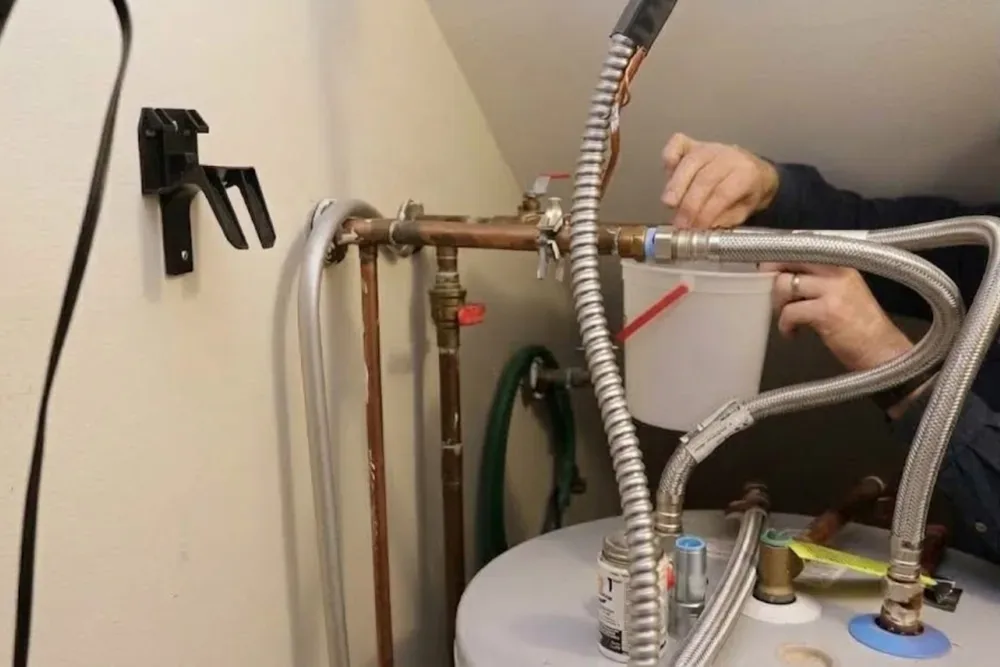
A flush with a garden hose clears light buildup, and the best time is before the noise starts. Heavy, hardened sediment may not drain at all. If the drain valve clogs and the noise continues, the tank may be near its end, and a plumber can judge whether it is worth keeping.
Error codes and flashing lights
Modern gas heaters and tankless units show a code or a blinking light. The meaning varies by brand, so the label inside the access panel or the owner's manual is the first stop. Ignition failures, flame sensing problems, vent pressure switch trips and temperature sensor faults are the groups most codes fall into.
Write down the model, the code and when it started. That helps the dispatcher bring the right sensor or igniter. For tankless units, scale on the heat exchanger is a frequent cause of codes, and our page on tankless service and descaling covers that.
Anode rods: the cheap part that protects the tank
An anode rod is a sacrificial metal rod inside the tank that corrodes so the steel liner does not. In moderately hard water it can wear down faster than in softer supplies. Replacing it before it is spent can add years to a sound tank.
The rod sits under a hex head on top of the heater, and it needs clearance above to pull out. A plumber can inspect it and tell you whether the tank is worth saving. If the tank is already leaking, a new rod will not help.
Heater down or leaking right now?
Call the 24/7 line. The dispatcher takes your address and sends a licensed plumber, with same-day appointments when available.
Gas, electric or heat pump: what repair looks like for each
Gas units have more parts that can fail, such as the pilot assembly, gas valve, vent and burner, and they carry the combustion safety risk. Electric tanks are simpler. They mostly need elements, thermostats and a good power supply, and a plumber with a meter can find the fault quickly.
Hybrid heat pump heaters add a compressor, fan and condensate drain on top of the electric elements. They need free air around them and a drain for condensate. Some repairs, such as sealed refrigerant work, may call for a manufacturer service contact. Ask the dispatcher whether the plumber works on your brand before the visit.
Insurance may cover sudden water damage from a failed heater, but the heater itself is often not covered. Ask your insurer before you decide, and keep photos of the damage.
If you are also considering softened water to protect the heater, see water softener and filtration for an honest look at whether it fits a home on Stow's city supply. For a nearby town, plumbers serving Hudson use the same 24/7 line.
QuestionsWater heater repair questions from Stow homeowners
It depends on where the water comes from. A leak at a fitting, the drain valve or the relief valve can usually be repaired. A leak from the tank body or seams means the liner has failed, and the tank needs replacement.
On a gas unit, check whether the pilot is lit and the gas valve is on. On an electric unit, check the breaker and the red reset button on the thermostat. If those are fine, a failed element, thermostat or thermocouple is likely, and a plumber can test each.
Yes. The emergency line runs 24/7, and a dispatcher takes your address and the problem, then arranges a licensed plumber. Same-day appointments are available when a plumber is open, including evenings and weekends.
A leaking tank can flood a basement and soak electrical items near the floor. Shut off the cold supply and the gas or power right away. If you smell gas, leave the building and call 911 or the gas utility from outside.
Many tank heaters run about ten to fifteen years, depending on water quality, how often they are flushed and whether the anode rod was replaced. Check the data plate for the manufacture date. Past that age, plan for replacement before it fails at a bad hour.
Rumbling usually means sediment on the tank floor. Stow's water is about 7 grains per gallon on average per the city's 2024 report, so mineral layers do build up. Flushing early helps, and heavy buildup may mean the tank is near the end of its life.
The meaning depends on the brand, and the label inside the access panel lists the codes. Most point to ignition, flame sensing, venting or temperature sensors. Tell the dispatcher the model and the code.