
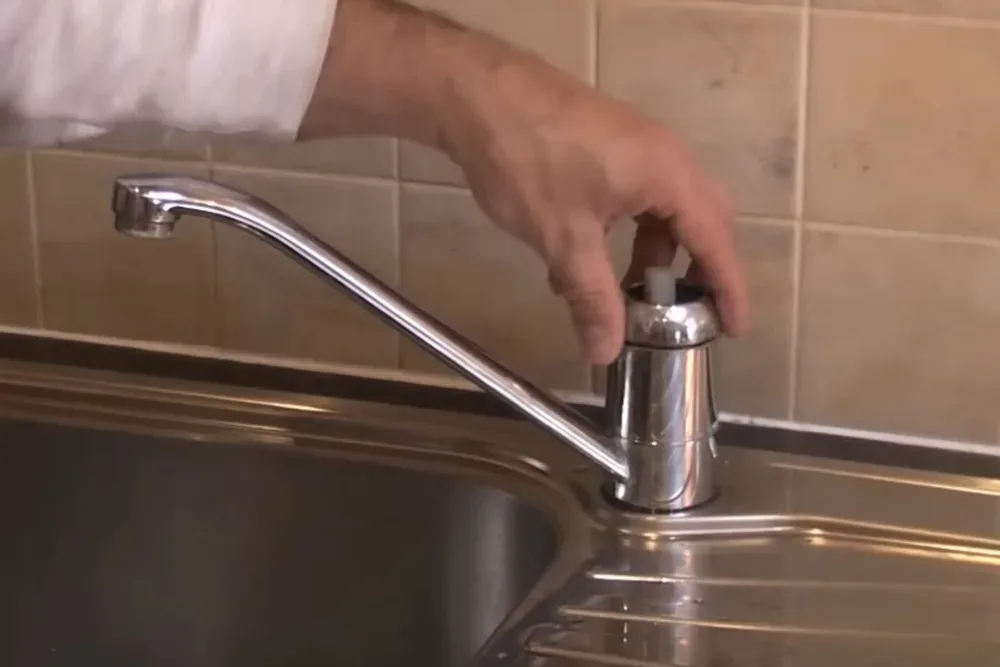
Why faucets wear out faster around Stow
Moderately hard water
The city's 2024 water quality report gives hardness of about 7 grains per gallon on average. That scale clogs aerators, grips cartridges and roughens the seats that drips start from, so a faucet that runs rough is often just chalked up inside.
Freeze and thaw cycles
Northeast Ohio winters cycle between freezing and thawing. Hose bibs and exterior walls take the abuse, and a split that happens in January shows itself in April.
Homes from the 1960s to 1990s
Older Census data puts the median Stow home at about 1980. Original shutoff valves in homes from that era often have stiff stems that fail when someone finally turns them.
Hydrant flushing
The city says hydrant flushing can briefly change water pressure. Sputtering or cloudy water after a flush is not always a faucet fault, so run the tap for a minute before calling.
A drip that keeps time
One drop every few seconds from the spout means a worn washer, seat or cartridge seal.
Water at the base of the handle
Failed O-rings or a loose packing nut push water up around the stem.
Low flow from one spout
Mineral buildup in the aerator or a clogged cartridge port is the usual cause.
A wet cabinet floor
A weeping supply line, nut or valve under the sink wets the base long before you see it above.
Hot and cold mixing wrong
A worn cartridge or ceramic disc can no longer balance the two sides.
A handle that spins freely
The stem or set screw has stripped, and the faucet needs an internal part.
Urgent: a faucet line is spraying or a valve will not close
Some faucet failures cannot wait for morning. A burst braided supply line under a vanity can push a steady stream, and a shower valve or tub spout that will not turn off keeps running into the drain or onto the floor. If the shutoff valve under the sink is frozen in place, the problem becomes a whole-house shutoff question.
Shut it under the fixture
Turn the oval handle on each supply valve clockwise until snug. Do not use pliers on a stiff stem.
Go to the main if the stop fails
The main shutoff is usually near the water meter. Close it and open one low faucet to drain the lines.
Protect the floor
Set towels at the cabinet base, empty the cabinet and set a bucket under the leaking line.
Keep power away from water
If a leak reaches an outlet, switch the breaker off from a dry spot and stay clear.
Stow's water meter is read by radio, and the bill shows a read code. A spraying line that ran all night will show up on the next real reading, so tell the dispatcher how long the water ran. A leak on the house side of the meter is the homeowner's, and the water department can say where its own responsibility ends.
Dripping faucets by type and how each is repaired
| Faucet type | Common failure | Typical fix |
|---|---|---|
| Compression (two handles) | Rubber washer or seat | New washer, resurfaced seat |
| Cartridge | Worn seals, mineral lock | Cartridge swap |
| Ball | Springs, cam, seats | Rebuild kit |
| Ceramic disc | Cracked disc or seals | Disc cylinder replacement |
| Pull-down kitchen | Hose, diverter, spray head | New hose or head |
Compression faucets are the old two-handle style, and they drip because the rubber washer wears against the seat. Cartridge and ball designs often show up in single-handle kitchen and bath faucets, and ceramic discs are common on newer fixtures. Naming the type matters because the wrong replacement part will not seat. A plumber pulls the handle, reads the brand and stem, and matches the repair kit.
Under-sink valves and angle stops that burst or stick
The small valve under a sink, called an angle stop, is the only thing between you and a whole-house shutoff. When it leaks at the stem, a packing nut tweak can fix it. When it is stuck or cracked, the plumber replaces it, which usually means shutting the main for a short time. The same goes for toilet valves, which are discussed on the toilet repair page.
Shower valves, showerheads and bathtub faucets
A showerhead that drips after the water is off is usually a worn cartridge or a buildup of scale in the valve, and a drip behind the wall is the harder case. Showerheads clog with deposits in the nozzles, and soaking the head in vinegar often brings the spray back. A tub spout that dribbles or a diverter that sends water to the head and spout together points to a failing diverter or cartridge.
When the leak is inside the wall, stained drywall or a wet ceiling below may be the first clue. At that point the work may involve leak detection before any wall is opened. Slow shower or tub drains are a different problem. A hair clog in the strainer or trap is the usual cause, and drain cleaning covers the tools that clear it.
Faucet or valve out of control?
Call (855) 575-2890 and a dispatcher will arrange a licensed plumber on our 24/7 emergency line.
Laundry sinks, utility sinks and outdoor spigots
Utility and laundry sinks in basements often leak at the faucet base, the trap or the washer hoses. Check the washer hoses, since a cracked rubber one floods a laundry room fast. An outdoor hose bib that is left connected through winter can freeze, split the pipe behind it and leak inside the wall when the thaw comes. Disconnect hoses before the first hard freeze.
Repair or replace the faucet
Repair makes sense when
- The body is sound and only a seal or cartridge is worn
- The finish is good and parts are easy to find
- The fixture is a newer model from a known brand
Replace when
- The body is pitted, cracked or corroded through
- The finish is peeling, and parts are discontinued
- Repairs keep coming back within a season
Repair is cheaper today, and replacement is cheaper over a decade if the faucet is old and failing repeatedly. A new faucet is also an easy time to add a new supply line and angle stop. Remodels that move or add fixtures are a bigger job, covered under plumbing installation.
Water damage to cabinets or floors may be covered by your homeowner's policy, so keep photos. The plumber can write down the cause and the repair.
QuestionsFaucet and valve questions from Stow homes
A worn washer, seat or cartridge seal is the usual cause. The fix depends on whether you have a compression, cartridge, ball or ceramic disc design.
Yes. The 24/7 emergency line takes calls any hour, and a dispatcher arranges a licensed plumber, with same-day appointments when available. A spraying line, a burst supply valve or a tub faucet that will not turn off are all treated as urgent.
Do not force it with pliers. Close the main shutoff and call, since a stuck stop usually needs replacement.
Often yes. Many cartridges come out through the front of the valve. If the leak is behind the wall, the plumber will explain access before cutting anything.
Remove the hose before freezing weather, and drain the line if there is an indoor shutoff. A frost-free spigot should slope downward so it empties.
Fix it when the body and finish are sound. Replace it when the metal is pitted or parts cannot be found.