
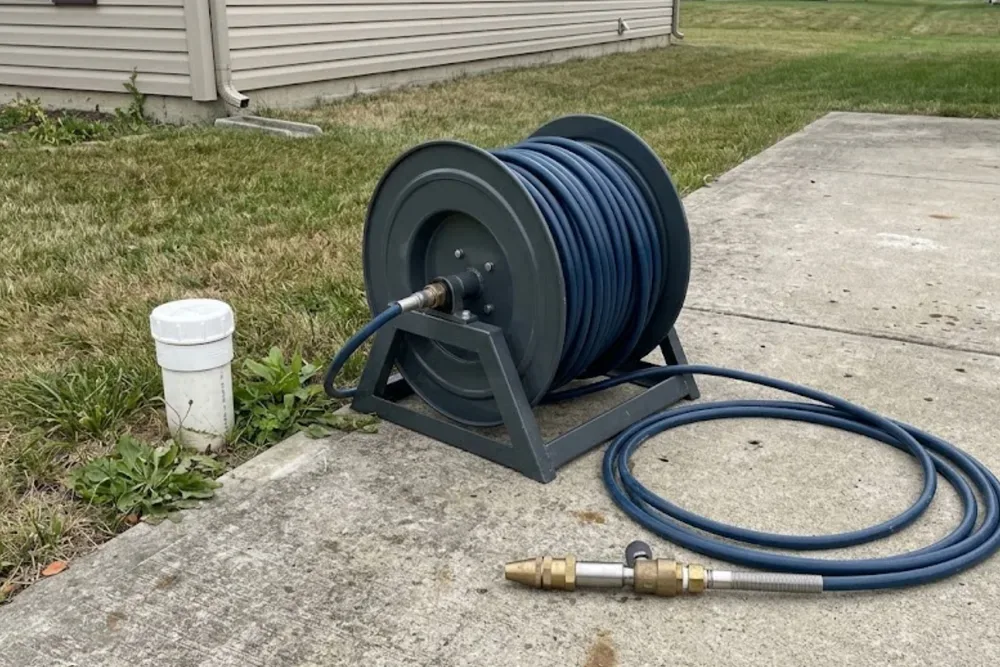
How a hydro jetting visit runs from first look to final flush
Camera look first
A small camera goes down the line through a cleanout. The plumber sees the pipe material, the joints, any sag and the type of buildup before choosing a nozzle.
Seal and protect
The plumber plugs or covers nearby fixtures so wash water does not splash back into a tub or toilet, then connects the hose to the cleanout.
Jet forward, pull back
The hose is fed in with a nozzle matched to the debris. A pointed nozzle bores through a plug, and a wide fan nozzle scrubs the wall on the way back.
Re-check with the camera
A second camera pass shows whether the wall is clean and whether anything the jetter exposed, such as a crack or an offset joint, needs a different fix.
Emergency hydro jetting: what to do when the backup keeps coming back
Call right away when a floor drain or the lowest tub fills with water, when sewage smell is spreading, or when a line that was cleared last month has stopped again. A repeat backup usually means the pipe wall is narrowed, so another quick cable pass may only buy a few weeks.
The 24/7 line covers nights and weekends, and a dispatcher can offer a same-day appointment when one is available. Jetting is one possible answer. The plumber decides on site after the camera look.
Do this while you wait
Stop all water use, including the toilet, washer and dishwasher. Keep people and pets away from any water that came up from a drain, and wear gloves if you must touch it. Do not pour bottled drain opener into a backed-up line, because the plumber may work in that water.
Signs a drain needs jetting rather than another cable pass
Clogs return every few weeks
Cabling cuts a hole through the plug but leaves the coating. Grease and soap rebuild the plug fast on that rough surface.
Kitchen branch is slow all the time
A long run from the kitchen sink to the main collects fat from decades of cooking. Water flows, just slowly, and a spoonful of cooking oil goes unnoticed until it stops.
Roots show up on camera
Fine hair roots through a joint can be cut and flushed. Thick, woody roots usually need a mechanical cutter before the jetter.
Gritty water in the trap
Silt, sand or flaked scale in the water from a cleanout means material is moving down the line and settling in low spots.
Several fixtures gurgle
A partly closed main line makes the toilet burp when the shower drains. Jetting restores the full pipe diameter along a longer run.
Restaurant or shop grease line
Commercial drains carry a higher grease load. Those jobs usually need an on-site look first because the layout varies.
When jetting is the wrong choice
Jetting makes sense when
- The camera shows grease, scale, silt or soft roots on intact pipe.
- The line is clay, cast iron with sound walls, or modern PVC.
- Joints sit square and the pipe holds its slope.
- A cable has already failed to keep the line open.
Hold off and repair first when
- The camera shows a crack, a collapsed section or a missing piece of pipe.
- Orangeburg, a tar paper style pipe, is present and deformed.
- A belly holds standing water, since jetting will not fix the sag.
- Joints are offset, and pressure could push water into the soil.
This is why the camera comes first. High-pressure water in a cracked or collapsed line can wash out the soil around the pipe and make a small defect worse. If the camera shows damage, the next step is a sewer inspection report and a repair plan, not more water.
Local pipesOlder clay and cast iron versus newer PVC in Stow
Older Census data puts the median Stow home at 1980, with about 18 percent built before 1960. Homes from the 1960s and 70s often have cast iron or clay drains, and those pipes pick up rough scale and sit at joints that can shift. Jetting is a good fit for sound old iron, because the scale comes off in sheets.
Newer homes lean toward PVC, which is smooth and takes jetting well. The city's 2024 water quality report gives about 7 grains per gallon of hardness on average, and over many years that can add scale on top of grease in a drain. If your home mixes the two, say a 1970 house with a PVC bathroom added later, the plumber picks the nozzle by the oldest section.
ComparisonJetting versus snaking at a glance
| Question | Cable machine | Hydro jetter |
|---|---|---|
| How it works | Spinning steel cable cuts the clog | High-pressure water scours the wall |
| Best for | Single clog close to the fixture | Grease, scale and silt along a run |
| Leaves pipe wall coated | Often yes | Usually no |
| Needs a camera first | Helpful | Yes, before any jetting |
| Fragile pipe | Can snag or scratch | Risky, repair first |
| Speed on a single sink | Faster | Overkill |
For everyday clogs, see drain cleaning. For a backup that affects the whole house, main sewer cleaning explains how the lateral is cleared and how Summit County fits in.
Same drain clogging again?
Call the 24/7 line. A dispatcher arranges a licensed plumber who checks the pipe with a camera before choosing a tool.
Equipment safety on a jetting job
A jetter produces enough pressure to cut skin, so the operator keeps the nozzle inside the pipe and never points it at a person. Stay out of the work area while the hose is under pressure. Floor drains, tubs and toilets near the line are plugged or covered because jet water can come back up through them. Once the job ends, the plumber flushes the line and cleans the area.
Jetting a commercial grease line usually needs an on-site look, because pipe size and run length vary. The plumber explains the plan and states the price before the machine is connected.
QuestionsHydro jetting questions we hear from Stow homeowners
Hydro jetting sends high-pressure water through a hose with a special nozzle to scour grease, scale, silt and roots from the inside of a pipe. The backward jets pull the hose along the pipe and clean the full wall.
For grease, scale and silt, yes, since a cable leaves the wall coated. For a hair clog in one sink, a cable is faster and plenty. The plumber chooses after looking at the pipe.
Yes. The 24/7 line takes your call, and a dispatcher arranges a licensed plumber. Same-day appointments are offered when available, and a camera look comes before any jetting.
It can, if the pipe is cracked, collapsed or badly offset. That is why a camera inspection comes first. Sound cast iron and clay pipe usually handle it well, and PVC does too.
Fine roots at a joint often wash out. Thick roots usually need a mechanical cutter first, and they can regrow unless the joint is repaired.
There is no set schedule. A kitchen line that clogs from grease may benefit from a periodic clean, while a clean PVC line may never need it.