
When a camera inspection is worth booking
The best time for an inspection is before a problem forces your hand. Buying a house is the classic case, since the lateral under the yard is out of sight and the seller may not know its condition. Repeat backups, slow drains in several fixtures at once and gurgling toilets are the other common triggers.
A camera is also the right step before lining or replacing a pipe, because the plumber needs to see the length, the bends and the damage to choose a method. For a basic clog, sewer line cleaning often comes first, and the camera follows if the blockage returns.
Backups that keep coming back
A line cleared and blocked again within weeks usually has a cause the camera can show, such as roots or a belly.
Several fixtures drain slowly
When the tub, floor drain and sink all slow down together, the main line is a better suspect than any single trap.
Sewer smell indoors or in the yard
Persistent odor can mean a cracked pipe, a dry trap or a failed connection. The camera helps tell which.
Damp or sunken ground over the line
A soft patch of yard, a new dip or unusually lush grass can mark a break that lets sewage escape.
Buying or selling a house
An inspection with recorded video gives both sides a shared record of the line's condition.
Planning a repair or lining
Before any trenchless or open-cut work, the plumber needs a clear picture of the pipe.
What the camera actually shows
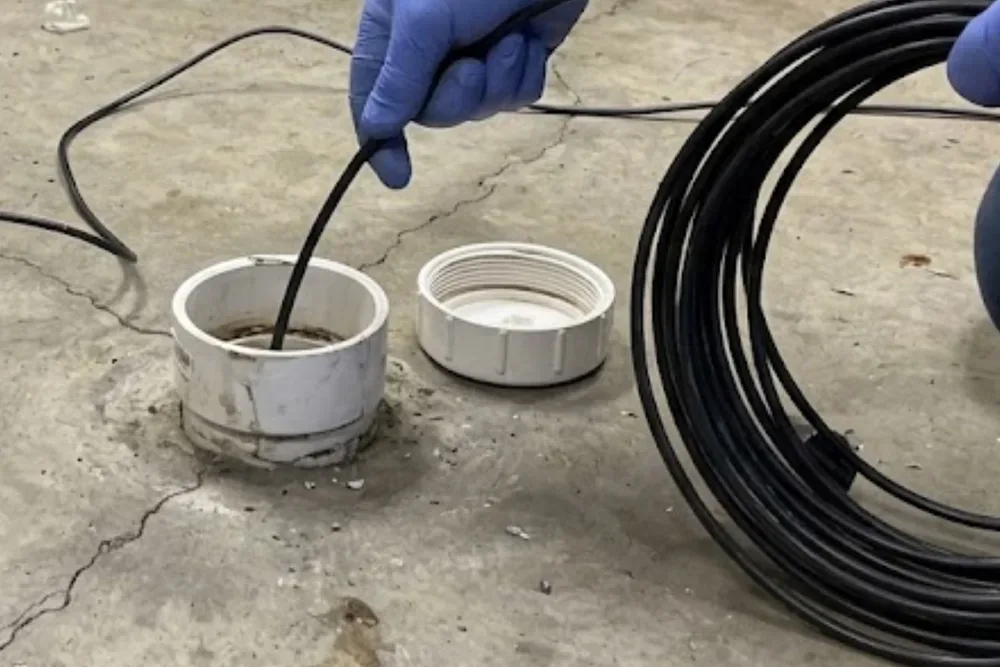
The camera head carries lights and a lens, and it is pushed through a cleanout, a pulled toilet or a roof vent opening. On the screen, the plumber watches the pipe interior as it moves along, calling out defects and noting the distance. Many systems record the video and save stills for your records.
Pipe material is easy to tell on screen. Clay tile shows joints at regular spacing, cast iron looks rough and scaled, and PVC is smooth and pale. Each fails differently, so what you see guides the next step.
| On screen | Likely meaning | Usual next step |
|---|---|---|
| Roots entering joints | Water leaking out through a gap | Cut roots, then repair or reline |
| Dip or belly in the pipe | Soil has settled and water pools | Monitor, or replace that section |
| Cracked or collapsed wall | Pipe is breaking down | Spot repair, lining or replacement |
| Offset joint | Sections have shifted apart | Excavate and realign that joint |
| Scale or grease buildup | Narrowed flow | Clean with a jetter or cutter |
Locating the line and marking the problem
A camera that carries a transmitter can be traced from above with a locator. The plumber walks the surface, reads the signal and notes the depth, so you know exactly where the pipe runs and where the problem sits. That matters because homeowners often guess the path wrong, and a dig started a few feet off misses the break.
What a good report should include
Ask for the recorded video, the distance to each defect, the pipe material, the depth of the line, and a plain statement of what was and was not reached. A report that says the camera stopped at a collapse is honest and more useful than a vague all-clear.
What this means for a Stow property
Sewer service is through the county
The City of Stow does not provide or maintain sanitary sewer service. Contact the Summit County Department of Environmental Services at 330-926-2400. The county bills quarterly based on the city's meter reads, so a quarterly county sewer bill usually means you are on public sewer rather than septic.
Who owns what
The county page does not say who owns the lateral, so ask Summit County Environmental Services before assuming. A camera tells you what is wrong, and the county can tell you who handles it.
Backup claims
The county's sewer backup page says backups caused by extreme weather, private lateral obstructions or non-flushable items are not a justifiable claim (Ordinance 119A). A recorded inspection that shows whether the blockage is in your lateral or the main gives you a record when you speak with the county.
Downspouts and the sanitary line
Stow Codified Ordinance 925.01 prohibits connecting roof drains, downspouts or other storm water conveyances to the sanitary sewer. A camera, along with smoke or dye testing, can reveal whether storm water has been tied into the line.
A word on older homes
Older Census data puts the median Stow home at 1980, with about 18% built before 1960. Homes from the 1960s and 70s often have cast iron or clay drains that crack or shift with age. That does not mean yours is failing. It means a camera is a useful first look when something seems off.
Ready to see inside your line?
Call to book a camera inspection. Same-day appointments when available.
What happens after the camera
Cleaning is enough when
- The pipe wall is intact
- The buildup is grease, scale or soft debris
- Roots are light and joints are tight
- No sag is holding water
Plan a repair when
- The pipe is cracked, collapsed or offset
- Roots keep returning through open joints
- A belly holds standing water
- A downspout or storm line connects to the sewer
If the camera finds damage, the next step is described on the sewer line repair page. Sanitary sewer permits are not handled by the Stow Building Department, and applications go to the Summit County Department of Sanitary Services at 330-926-2409. If water seems to be escaping from a supply pipe rather than a drain, a leak detection visit is the better tool.
Commercial properties usually need an on-site look before the scope is set. If you are buying a home, ask your agent whether the inspection can be scheduled inside the contract window.
How a sewer camera visit goes
Tell the plumber your reason
Say if you are buying, chasing backups or planning a repair so the inspection answers your question.
Open a cleanout and feed the camera
The plumber chooses a cleanout or fixture opening and pushes the camera toward the street or septic tank.
Watch, mark and record
Defects are noted with distance and depth, and the line is marked from above if you want its path flagged.
Review the findings together
You see the video, hear the options, and get a clear price before any repair begins.
We also work with homeowners in nearby Kent. If your home is on septic rather than public sewer, ask Summit Public Health about the tank system, and a camera can still examine the pipe leading to it.
QuestionsSewer camera inspection questions
It shows the inside of the drain line: cracks, roots, sags, offset joints, buildup and the pipe material. The plumber records video and notes the distance to each problem.
It is a good idea, since the lateral is hidden and repairs can be large. A recorded inspection tells you the condition before closing.
It can show whether the blockage sits in your lateral or farther along. The county's backup page says private lateral obstructions are not a justifiable claim, so call Summit County Environmental Services at 330-926-2400 with the footage.
The county's page does not say, so ask Summit County Environmental Services at 330-926-2400 where private responsibility ends.
It can reveal storm water entering the line, and smoke or dye testing helps trace the source. Stow Codified Ordinance 925.01 prohibits connecting downspouts and other storm water conveyances to the sanitary sewer.
Yes, when the camera head carries a transmitter, the plumber traces the signal from above and marks the path and depth.
No. Inspection looks and records, while cleaning clears debris. A plumber may clean first so the camera can pass, and the visit explains each step.