
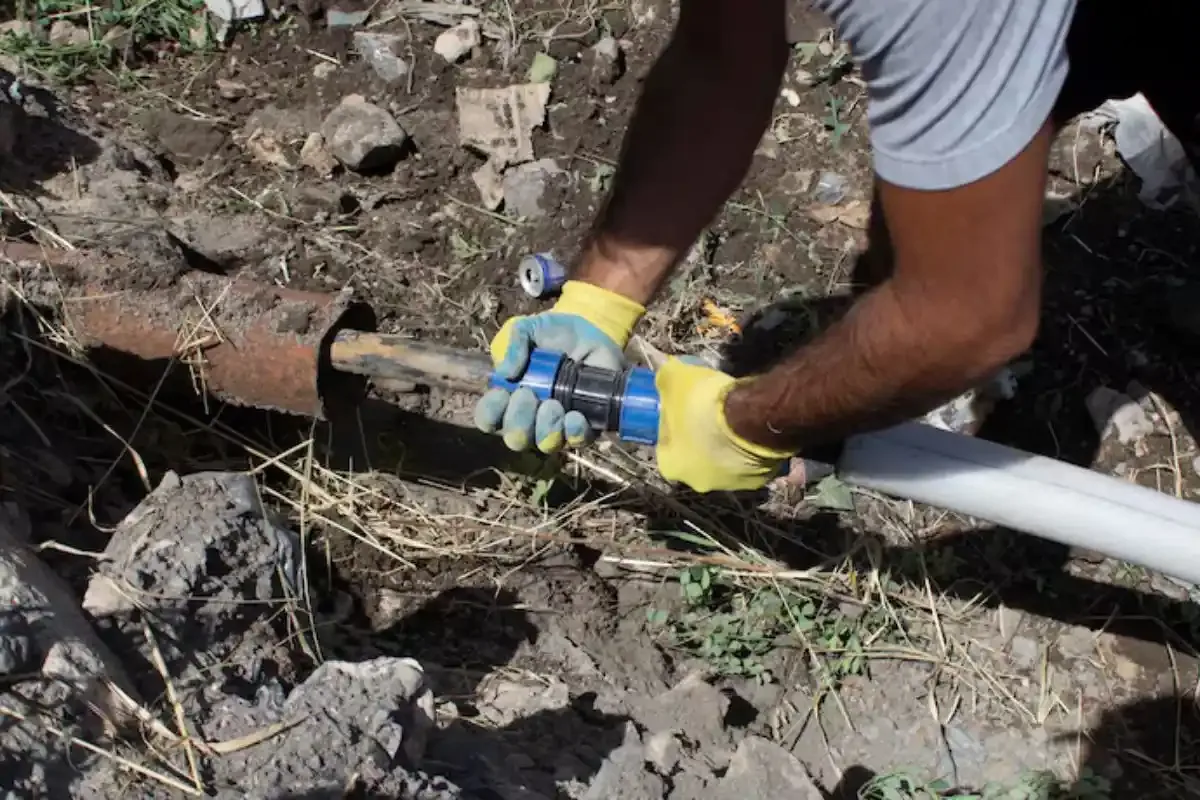
Urgent water line trouble: when to call right now
Treat the situation as urgent when water is rising in the yard or against the foundation, when the house has lost water entirely, or when a hole or sinkhole forms along the line path. A service line runs under pressure all day, so even a small break can move a lot of water before anyone notices.
Watch your own side of the line while waiting. The steps below keep the damage small and give the dispatcher what a plumber needs to plan the job.
Do this while you wait
Close the main shut-off valve inside the house, then open the lowest tap to relieve pressure. Keep people and pets away from any soft or sinking ground near the line. Stay out of a flooded basement if water is near the panel or outlets, and tell the dispatcher about it. If water is bubbling in the street or at the meter pit, that is the city's side, so phone the water main break line at 330-689-5700.
Signs your water service line is leaking
A wet or sunken patch of lawn
Soggy ground or a dip between the street and house during dry weather suggests water is escaping from the line.
Meter spins with taps closed
If the dial keeps turning after every fixture is shut, the water is going somewhere, and the line is a prime suspect.
Pressure that fell for no reason
A gradual drop at every faucet can follow a leak before the first puddle shows.
Muddy or rusty water
Dirt drawn into a cracked line, or corrosion stirred up by changing pressure, can discolor the supply.
Bills that climb with no change at home
A steady rise in usage on a household with the same habits points to hidden loss.
Water in the basement near the entry point
Dampness where the pipe comes through the foundation wall can be a leak right at the entry.
Where the city ends and the homeowner begins
Stow buys its drinking water from the City of Akron, and the city's water department handles the system up to your meter. The water main break emergency number is 330-689-5700, and the Water Department office, open Monday to Friday from 8:00 to 4:30, is 330-689-2889. Call the right one first so the right crew shows up.
As a general practice, a leak in the street or at the meter is the city's, and a leak on the house side of the meter is the homeowner's. Because the exact boundary can vary, ask the Water Department where its responsibility ends before you pay for digging. The water billing page on the city's site also links a Service Line Inventory document, which is worth opening if you want to see what the city lists for your property.
Underground leaksFinding a leak on a buried line
Water that leaves a buried pipe does not always surface. Soil absorbs it, drains carry it off, or it drops into gravel under the driveway. A wet spot may sit ten or twenty feet from the break, which is why digging at the damp spot alone often misses.
Start with the meter. With the house quiet, a moving indicator means loss somewhere downstream, and closing the main valve inside separates a leak in the house from one between meter and foundation. The step-by-step version is on our leak detection page.
| Method | What it does | Limit |
|---|---|---|
| Acoustic ground microphone | Picks up the sound of water escaping through soil | Plastic pipe is quiet, so results are weaker |
| Tracer gas | Gas injected into the line rises through soil above the break | Needs a clear surface path for the gas |
| Pipe locator | Traces where the line runs before digging | Needs a metal tracer or access point |
| Pressure test | Shows whether the line holds pressure | Tells you if, not where |
| Visual and moisture check | Confirms damp soil or a bubbling source | Surface water may travel from elsewhere |
Why a short dig is smarter than a long one
A good locate narrows the break to a few feet, so the excavation is a small hole instead of a trench across the lawn. If the pipe is old and brittle, though, the hole can reveal more trouble than expected, and a plumber should say so before sealing it up.
Low water pressure in a Stow house
Low pressure has several causes, and the service line is only one. A partly closed valve, a scaled-up fixture, a failing pressure regulator or an old galvanized pipe that has narrowed inside can all do it. Moderately hard water, about 7 grains per gallon on average in the city's 2024 report, leaves scale in aerators, showerheads and valves, so check those first at the fixture that complains.
If every fixture is weak, look at the whole house. The city flushes and maintains roughly 2,250 fire hydrants, and the city says that work can temporarily change pressure, so a brief dip or cloudy water after flushing is not always a plumbing fault. When low pressure lasts, a plumber tests it at an outdoor spigot to see whether the line, a regulator or the house piping is at fault.
Repair or replace the service line
Spot repair is reasonable when
- The leak is a single failed fitting or crack
- The pipe on either side is in good condition
- The break is close to the surface or accessible
- The line is relatively new
Replace the line when
- There have been repeated leaks on the same line
- The pipe is corroded, brittle or an older material
- Pressure has fallen along with other symptoms
- A repair would need a long trench anyway
Replacement can be done by digging a trench or, in some cases, by pulling new pipe through the old path with less surface disruption. Which works depends on depth, what is above the line (driveways, walks, trees) and the condition of the old pipe, so the plumber decides on site. If the rest of the house plumbing is also tired, it may be worth reading about repiping at the same time.
Wet yard or no water? Call the 24/7 line.
A dispatcher takes your address and arranges a licensed plumber. Same-day appointments when available.
Permit rules depend on the job, so ask the City of Stow Building Department before work begins. Commercial properties usually need an on-site look before a price can be set.
How a water line repair visit works
Call and describe
Give the dispatcher your address, the symptoms, and whether you have closed the main valve.
Check the meter and the pressure
The plumber reads the meter, tests pressure and decides whether the loss is inside or outside.
Locate and open the line
Listening or tracer gas narrows the spot, and a small excavation exposes the pipe.
Repair, test and restore
The plumber repairs or replaces the pipe, pressure tests it, and tells you what restoration remains.
Neighbors in Tallmadge can reach the same line. The burst pipe repair page covers failures inside the house.
QuestionsWater service line questions answered
Look for a wet lawn in dry weather, a meter that moves with taps closed, falling pressure or a rising bill. Closing the main valve inside and watching the meter tells you whether the loss is on the house side.
Yes. Soil, gravel and drains can carry the water away, so the line may leak for weeks with no puddle. A meter test and a listening or tracer-gas locate find it before digging.
Yes. The 24/7 emergency line covers nights and weekends, and a dispatcher arranges a licensed plumber. Close the main valve inside and call the city main break line at 330-689-5700 if the water is in the street.
A leak in the street or at the meter is generally the city's, and the house side belongs to the owner. Call the Water Department office at 330-689-2889 and ask where its responsibility ends.
Look at the pipe where it enters the house near the main valve, since copper, plastic and steel look different. You can also ask the Water Department, and the Service Line Inventory on the city's water billing page may help. A plumber can identify the material on site.
Check the main valve, any pressure regulator and the aerators first. If the whole house is weak, a leak on the line or hydrant flushing may be the cause.
Permit rules vary by job, so ask the City of Stow Building Department before work starts. Their main line is 330-689-2729.