
Repair or repipe: a plain decision guide
A pipe that leaks once is not always a pipe that is finished. A plumber weighs three things: how many leaks have happened, what material the pipe is, and how it looks on the inside where a cut section can be examined. The honest rule of thumb is that a repair is cheaper today and replacement is cheaper over the next several years if failures keep coming.
Use the two columns below as a first pass. If your house lands mostly on the right, schedule a visit and have the plumber open a few access points and check the pipe wall.
Repair is the sensible call when
- There has been one leak, at a fitting or valve
- The pipe near the leak looks clean and thick-walled
- Pressure and water color are normal at every fixture
- You plan to sell soon and the pipe is serviceable
Repipe when
- Pinholes appear in several places over time
- Water runs brown or orange after sitting
- Pressure is weak throughout the house
- The pipe is galvanized steel or polybutylene
| Pipe | Typical era | Common problem |
|---|---|---|
| Galvanized steel | Older homes, often pre-1960s to 1970s | Rust inside narrows the pipe and drops pressure |
| Early copper | 1960s onward | Pitting and pinholes, plus failed solder at joints |
| Polybutylene (gray or blue plastic) | Late 1970s to mid 1990s | Fittings fail, and the pipe was later phased out |
| CPVC | 1980s onward | Brittle with age, cracks at fittings |
| PEX | Newer homes and recent repipes | Fails mostly at crimp or expansion fittings |
Signs your pipes are near the end
Brown or orange water at the tap
Rust from galvanized lines shows up first thing in the morning or after the house has been away.
Pressure that is weak everywhere
Mineral and rust buildup narrows the pipe, and a single fixture repair will not cure it.
Pinhole leaks in different rooms
A repair on the second floor followed by another in the basement says the whole system is aging together.
Repeated patches on the same run
Each patch shifts the stress to the next weak point, so the repair bills add up.
What Stow homes tend to have
A housing stock of the 1960s to 1990s
Older Census data puts the median Stow home at 1980, with about 32% built from 1960 to 1979 and 38% from 1980 to 1999. Homes from this era often have early copper, and some older ones still have galvanized lines.
The polybutylene window
Late 1970s through mid 1990s houses may contain polybutylene, a gray or blue plastic pipe that was widely used and later phased out. Look at the pipe near the water heater or where the main comes in. If it matches, have a plumber assess it before it leaks.
About 18% pre-1960
Roughly 18% of Stow homes predate 1960 in the older data. Those houses are the ones most likely to have galvanized supply lines or cast iron drains that need attention.
Moderately hard water
The city's 2024 water quality report shows about 7 grains per gallon on average. Scale narrows pipe, so older lines can lose pressure even without a leak.
Planning a repipe: what to decide before booking
A whole-house repipe takes planning because water is off for part of each day while pipes are swapped. Think about when the house is quietest, whether anyone needs water for medical or work reasons, and where a temporary supply can be set up.
Bring a few items to the first visit: your water bills, a list of past leaks and where they were, and any photos of the pipe near the heater or the main. The more history the plumber sees, the better the recommendation.
Whole house or partial
A partial repipe replaces a bad stretch, such as the lines to a bathroom group or the run in an addition. It costs less than a full job and can be a good fit when only one zone is troubled. A whole-house job makes sense when failure is spreading, when the material is a known problem type, or when you plan to stay for many years.
PEX or copper
PEX is flexible, goes in with fewer joints and tolerates freezing better, so it is often the faster and less invasive choice. Copper has a long track record, handles heat well and suits exposed runs, but it needs more fittings and more labor. Neither is right for every house, and a good plumber will explain the trade-off for yours.
Permits and inspections
Stow's Building Code and Permits page lists Plumbing Systems among the work that needs a building permit, and rules vary by job, so ask the City of Stow Building Department (330-689-2729) before work starts. Plumbing inspections run Monday, Wednesday and Thursday mornings, and same-day requests must be called in before 9 am at 330-689-2728. Plan the schedule around that.
Wondering if your pipes need replacing?
Call to book a plumber who will look at your actual pipes. Same-day appointments when available.
What the work involves
Inspect and map
The plumber traces the supply lines, checks the material, and plans where new pipe will run.
Open small access points
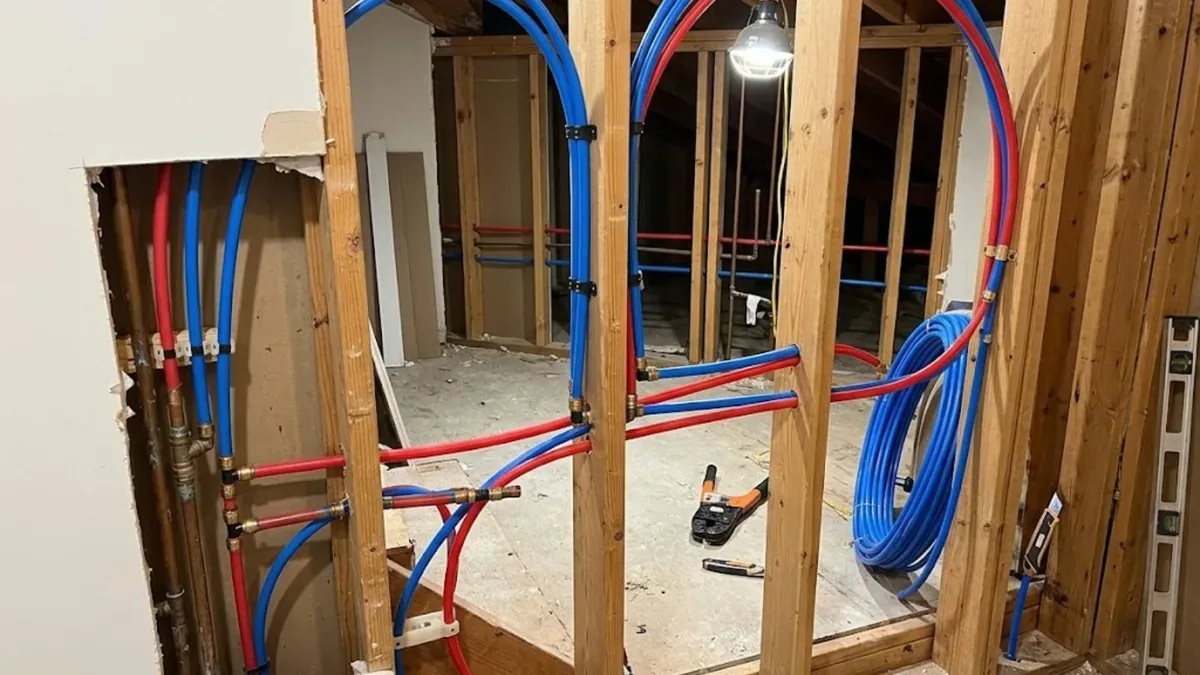
Instead of tearing out walls, the plumber cuts targeted openings in drywall, usually in closets, behind fixtures and in basement ceilings.
Install and connect
New lines are run to each fixture, then tied into the main and the water heater, with water shut off for part of the day.
Pressure test and close up
The system is tested under pressure, inspected where required, and the openings are left ready for patching.
Drywall repair and paint are usually a separate trade, so plan for it. Work in a finished basement ceiling or a tiled bathroom costs more time than an open crawlspace run. If a service line also needs attention, see water service line repair to understand that part of the system.
Water-off time, drywall patching and permits are worth asking about up front so nothing surprises you later. If the main concern is a single leak, a leak detection visit may cost less than a repipe, and a burst pipe repair may be enough on its own.
QuestionsRepiping questions before you commit
Look at the pattern. Several pinholes over time, brown water, weak pressure at every tap or a pipe material known to fail points toward repiping. One leak in sound pipe is usually just a repair.
Galvanized steel rusts from the inside and narrows over time, so most are replaced eventually. Replacement makes sense when pressure drops, water turns brown or leaks begin to appear.
Polybutylene is a gray or blue plastic that was widely used and later phased out. Fittings are the usual failure point, so have a plumber assess it and discuss replacement.
Yes. A partial repipe replaces the worst section, such as one bathroom group or an addition, and works when the rest of the system is in good shape.
Water is off for part of each work day while the lines are swapped. The plumber explains the schedule before starting, and many homeowners plan to stay elsewhere for key hours.
It requires access openings, usually in closets and behind fixtures, and the plumber keeps them as small as possible. Drywall patching and paint are normally separate work.
The city's permit page lists Plumbing Systems among work needing a building permit. Ask the City of Stow Building Department at 330-689-2729 before work starts, because rules vary by job.