
Fix the old toilet or put in a new one
Most toilet trouble comes down to a few cheap parts inside the tank. A flapper, a fill valve or a wax ring can be swapped in one visit, and the porcelain keeps working for years afterward. A new toilet makes sense when the bowl or tank is cracked, the glaze is crazed, or the model keeps clogging no matter what is done to the drain.
Repair makes sense when
- The porcelain is sound and the flush only fails sometimes
- A flapper, fill valve or flush lever is worn
- Water seeps at the base and the floor is still firm
- The supply line or shutoff valve is the only leaking part
Replace when
- The tank or bowl has a hairline or open crack
- The floor around the base is soft or stained
- The toilet clogs weekly even with a clear drain
- Parts for an older model are hard to find
| What you see | Likely part |
|---|---|
| Tank refills every few minutes | Worn flapper |
| Hissing that never stops | Fill valve |
| Puddle around the base | Wax ring or closet bolts |
| Weak flush, slow bowl | Rim jets or partial clog |
| Wobble when seated | Loose flange or bolts |
The bowl refills by itself
A ghost flush every so often means the flapper is letting tank water seep into the bowl.
Water on the floor after a flush
The wax ring may have lost its seal, or a tank bolt washer is dripping.
A stubborn handle
A loose or snapped flush lever arm keeps the flapper from lifting all the way.
Gurgling after a flush
Air is fighting past a partial clog in the toilet trap or the drain behind it.
Toilet overflowing or clogged right now: an urgent job
A toilet that is rising toward the rim is an urgent problem, especially upstairs where the ceiling below takes the damage. Do not flush again hoping it will clear. Each flush sends more water into a bowl that has nowhere to go.
Do this in the next two minutes
Reach behind the toilet and turn the small oval or round handle on the supply valve clockwise until it stops. Lift the tank lid and push the flapper down by hand if the tank is still refilling. If water has reached an outlet or power strip, stay clear and shut the breaker off from a dry spot.
For a bowl that is full but not rising, a flange plunger pressed in a firm seal over the drain hole is the right first tool. Use slow pushes and one sharp pull. A closet auger, a short cable with a hook, reaches the trap without scratching the porcelain when a plunger will not move the blockage.
If two toilets or a tub also back up, the clog is deeper, and drain cleaning equipment is the right answer rather than another plunge.
Call and describe it
Give the dispatcher your Stow address, which toilet it is and whether water is still rising.
Shut the supply
Close the angle stop behind the bowl and mop standing water so it does not reach other rooms.
The plumber tests the flush
The plumber checks the bowl, trap and nearest drain with a plunger, auger or camera as needed.
Fix, then test
After the repair, the toilet is flushed several times to prove the seal and the fill are right before the area is cleaned up.
Running, phantom flushing and slow refills
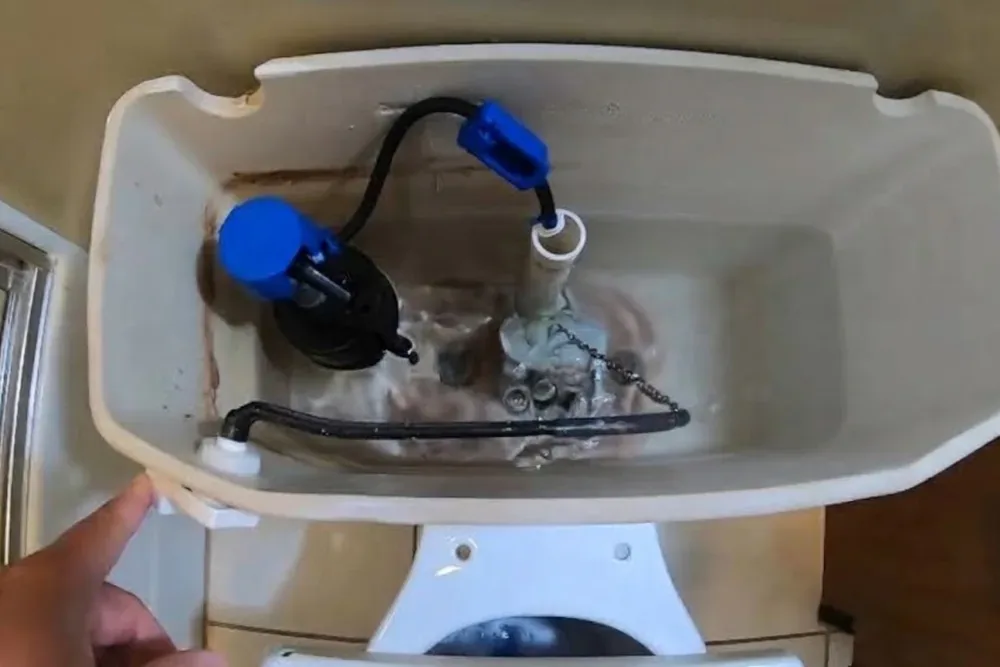
A running toilet wastes water around the clock, and the trickle you hear from the tank adds up on the Stow water bill. Open the tank and look. If the flapper does not drop back flat over the opening, or its rubber feels slimy or warped, it leaks into the bowl. If the water level creeps up to the overflow tube, the fill valve is not shutting off.
Stow's water averages about 7 grains per gallon according to the city's 2024 water quality report, which is moderately hard. That scale builds on fill valve seats and flapper edges, so a part that looked fine two seasons ago can start to hiss. A new fill valve and flapper kit is usually a short visit, and a stiff flush lever or a chain that is too long gets sorted at the same time.
Leaks at the base: wax ring, flange and closet bolts
A toilet sits on a wax or foam ring that seals the bowl outlet to the floor flange. When that ring fails, water escapes at the base on every flush, rots the subfloor and can drip into a ceiling or crawl space below. The fix means shutting off the supply, draining the bowl, lifting the toilet and setting a new ring.
The flange is the metal or plastic ring bolted to the floor. If it is cracked, rusted or sitting below the finished floor after a tile job, a new ring cannot seal properly. A flange repair ring or spacer fixes that, and the closet bolts that hold the toilet down get replaced with fresh ones. Soft flooring, a musty smell or discoloration around the base are signs that the leak has been going on for a while.
Supply lines, shutoff valves and rocking toilets
The braided line from the wall valve to the tank gets stiff with age, and the valve itself can seize or weep from the stem. Never force a valve that will not turn. A burst or stuck angle stop is covered on the faucet and valve repair page, and a plumber can replace it with a quarter-turn style that works smoothly.
A toilet that rocks is loose at the floor. Tightening the nuts may be enough, but if the flange sits low or the floor is uneven, shims or a flange fix are needed. Cranking the bolts down on a wobbly bowl is how people crack porcelain, so do not overtighten.
Toilet down in the middle of the night?
Call (855) 575-2890 for the 24/7 emergency line. A dispatcher will take your address and arrange a licensed plumber.
Installing a new toilet: removal, flange and fit
A replacement starts with measuring the rough-in, which is the distance from the finished wall to the center of the floor drain. In general terms, many homes use a standard rough-in, but older bathrooms vary, and a toilet that does not match leaves a gap or a bowl pressed against the wall. A plumber checks this before the old fixture comes out.
Old toilet removal means draining the tank, disconnecting the supply, lifting the bowl and scraping off the old ring. Then the flange is inspected, a new ring and bolts go in, and the toilet is set level. A one-piece model wipes clean easily but is heavy. A bidet seat needs a nearby outlet and a tee on the supply line, and the plumber can fit one while the new toilet goes in.
Water-saving models flush with less water per cycle, and a good one clears the bowl in one flush. Ask which flush system is used, since pressure-assist and gravity tanks sound and behave differently. Bathroom remodels that move the toilet are a bigger job, covered under plumbing installation.
What older Stow houses and the county sewer mean for your toilet
Older Census data puts the median Stow home at about 1980, with a large share built in the 1960s and 70s. Homes from that era often have cast iron or clay drains with rough interiors, so a toilet that clogs again and again may be telling you about the pipe, not the bowl. A camera run shows the difference.
Flushables and the county sewer
Summit County's sewer backup page says backups caused by private lateral obstructions or non-flushable items are not a justifiable claim. Wipes, paper towels and feminine products are the usual culprits, so keep them out of the bowl and out of the lateral you will pay to clear.
If a water leak damaged your floor, ask your homeowner's insurer what it covers. The plumber can document the cause and the repair.
QuestionsToilet questions Stow homeowners ask
Lift the tank lid and check the flapper first. If it does not seat flat or the rubber feels soft, replace it. If the water reaches the overflow tube, the fill valve needs adjusting or replacing.
Turn the shutoff valve behind the bowl clockwise and stop flushing. Then call the 24/7 line at (855) 575-2890 if a plunger does not clear it.
Yes. The 24/7 emergency line is answered every night and weekend, and a dispatcher arranges a licensed plumber with same-day service when available. Overflows, base leaks and broken supply valves are treated as urgent.
Use a flange plunger first for a clog in the bowl. If it fails, a closet auger reaches the trap. If other drains are slow, call a plumber, since the clog is deeper.
It is often a failed wax ring, but it can also be a leaking tank bolt or supply connection. Dry the floor and flush to see where the water appears.
Yes. The plumber removes the old fixture, checks the flange, sets a new ring and installs the new toilet. The price is stated before work starts.
The closet bolts may be loose, or the flange may sit low. A plumber checks the flange and floor before tightening, since overtightening can crack the bowl.