
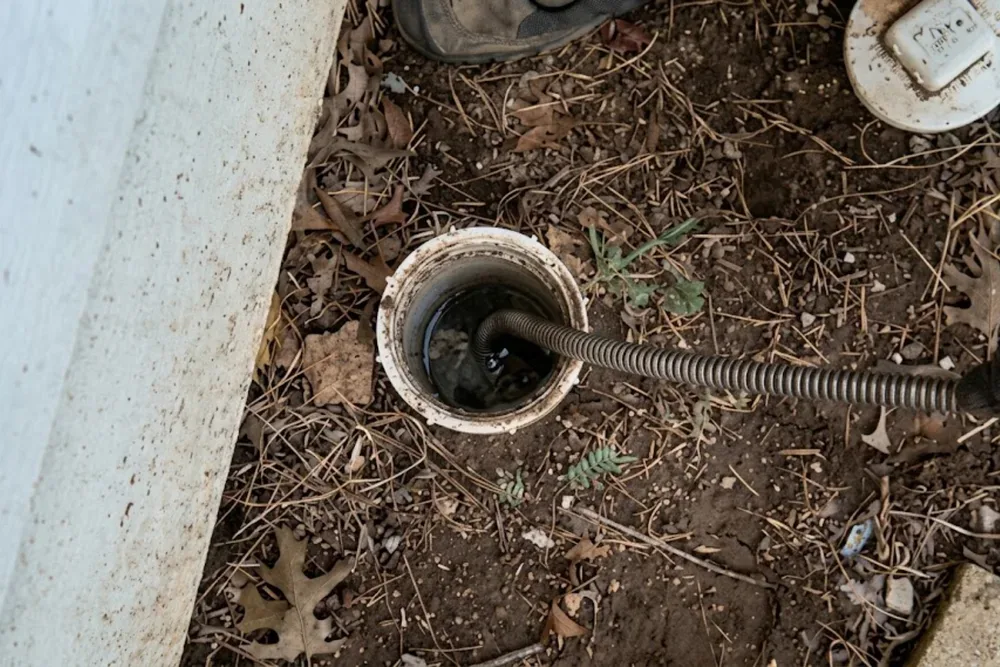
Pick the right tool before the machine comes off the truck
Most clogs need a plunger, a hand auger or a cable machine. A smaller number need a jetter or a camera first. Choosing the wrong tool wastes a visit, and the clog comes back within weeks.
The table below shows how a plumber matches the symptom to the tool. If you are unsure where your problem fits, describe it to the dispatcher and a plumber will sort it out on site.
A cable machine is enough when
- Only one fixture is slow or stopped, and the others drain normally.
- The clog is hair, soap, a wad of paper or food in a 1.5 inch to 2 inch branch line.
- A plunger moved the water a little but the drain closed up again.
- The pipe is in decent shape and the blockage is within reach of a cable, usually under 50 feet.
Step up to jetting or a main-line call when
- Two or more fixtures back up together, or the basement floor drain gurgles.
- A cable opens the drain but it clogs again with grease, scale or silt. See hydro jetting for that case.
- Roots are suspected, which is common where old clay joints sit near a tree.
- Water rises in the lowest drain whenever the washer or dishwasher runs.
| What you see | Likely location | Usual tool |
|---|---|---|
| One slow bathroom sink | Trap or branch pipe | Hand auger or small cable |
| Kitchen sink standing water | Trap arm or kitchen branch | Cable machine, 3/8 inch cable |
| Tub or shower pools at ankles | Overflow tee or tub trap | Small drum machine |
| Washer drain spits water out | Standpipe and branch line | Cable machine |
| Floor drain gurgles, toilets slow | Main drain or lateral | Large cable, then camera |
Clogged sink, tub and shower drains in Stow homes
A bathroom sink drain collects toothpaste, hair and a film of soap that thickens inside the P-trap. A tub or shower drain collects far more hair, and the soap hardens around it into a gray plug a few inches below the strainer. Water that drains slowly for weeks and then stops is the classic pattern.
The quick check is to run the other fixtures. If the kitchen and the laundry drain fine, the problem belongs to that one branch and the fix is local and fast.
Slow drain that gurgles
Air is being pulled past a partial blockage. The clog is usually close to the trap, and a cable often clears it on the first pass.
Water pools around your feet
Standing water in a shower pan means the tub trap or the line just past it is blocked, most often by hair wrapped in soap.
Bad smell from one drain
A film of grease or soap has built up on the pipe wall and is decaying. Snaking removes the source, and a smell alone does not mean a sewer problem.
Two fixtures act up together
A sink and a tub that share a branch line can point to a clog downstream of both. That is where a longer cable or a camera helps.
Kitchen sink clogs: grease, food and the disposal
Kitchen lines clog differently from bathroom lines. Cooking fat goes down the drain warm and liquid, then cools into a waxy coating that narrows the pipe. Rice, pasta, coffee grounds and potato peels ride along and stick to that coating until the pipe is half closed.
A disposal does not fix this. It chops food into smaller pieces, but the pieces still land on the same greasy pipe wall. If your sink has a disposal and the standing water will not move, check the disposal first (see garbage disposal repair), then the trap arm behind it.
A county fact that matters for kitchen grease
Summit County's sewer backup page says backups caused by non-flushable items are not a justifiable claim. A plugged kitchen line is usually private, so the realistic path is a plumber, not a county claim. Keep grease in a can, wipe pans before washing, and the line stays open far longer.
Urgent drain trouble: what to do first when water will not go down
Call right away when sewage is coming up in a tub or floor drain, when a toilet and a tub both fail at once, or when water is heading for finished flooring. Drain emergencies are common after heavy rain and after a holiday dinner with a full house.
The emergency line is open 24/7. A dispatcher can arrange a same-day appointment when one is available, or send a plumber out after hours for the urgent ones.
Stop adding water
No showers, no laundry, no dishwasher cycle. Every gallon you add has to go somewhere, and in a blocked line it goes onto your floor.
Open a path to the cleanout
Move boxes away from the main cleanout, a capped pipe in the basement or utility room. The plumber can reach the line faster if it is clear.
Protect the floor and your skin
Lay towels along the wet edge. Use gloves if the water looks gray or smells like sewage, and keep children and pets out of it.
Look at the other drains
Note which fixtures are slow, gurgling or stopped. Tell the dispatcher, because that pattern tells the plumber whether to bring a small cable or a large one.
Drain snaking with a cable machine, step by step
Snaking, also called cabling, feeds a spinning steel cable into the pipe until it hits the clog. It is the right tool for hair, paper, food and soft grease, and it is quick when the clog is close to the fixture.
Find the access point
The plumber removes the trap, uses a cleanout, or goes in through a tub overflow or vent so the cable has a straight path.
Size the cable to the pipe
A narrow cable suits a bathroom sink. A heavier cable with a cutting head suits a kitchen or main branch line.
Break up the clog
The machine spins the cable while the plumber feeds it in. When the cable stops biting, the clog is either cleared or has wrapped around the head.
Flush and test
Water runs through the line for several minutes. If it drains fast, the job is done. If it still lags, the plumber explains whether jetting or a camera is the next move.
Cable machines have limits. A cable cuts a hole through a grease plug but leaves the wall coating, which is why a kitchen line can clog again. A cable can also scratch old cast iron or snag on a broken clay joint, so a plumber stops and reassesses if the cable behaves oddly.
Two smaller problemsShower and tub drain clogs, and drain line leaks
Shower and tub drains
Tub drains hide the clog behind a strainer, a stopper linkage or a pop-up. Pull the stopper and clear what you can reach before you call. If the tub still holds water after that, the blockage is in the trap or the branch, and a small drum machine is the tool.
Drain line leaks
A drain line can leak at a slip joint under a sink, at a cracked tub trap, or in a buried section where a joint has shifted. Look for a stain on the cabinet floor, a ceiling spot under a bathroom, or soggy ground near the foundation.
A leak only shows while water runs, so a camera or a dye test helps trace it. If the leak is in a buried sewer lateral, the next stop is sewer line repair.
Local causesWhat is different about drains in Stow
Medium-hard water
The city's 2024 water quality report gives about 7 grains per gallon on average. Over many years that hardness can contribute to mineral scale inside pipes, which narrows them and gives grease and hair something to catch on.
Mixed pipe ages
Older Census data puts the median Stow home at 1980, with roughly 18 percent built before 1960. Homes from the 1960s and 70s often have cast iron or clay drains, which scale and shift. Newer homes are mostly PVC.
Private lateral, county main
The City of Stow does not run sanitary sewer. Summit County does, at 330-926-2400. A blockage in your own lateral is usually a plumber call first, and a plumber can tell whether it is private or in the county main.
Wet-weather loads
Stow's flood history, including the July 2003 storms, is why sump pumps and drainage matter in low basements. A backup that shows up only in heavy rain can point to the lateral or to water entering the wrong line.
Storm drains and yard drains
Yard drains, catch basins and downspout lines fill with leaves, grit and root fibers, and they clog in spring and fall. A cable or a jetter clears them, and the camera checks for a broken tile or a low spot. This work is separate from your sanitary drains.
One rule is firm. Stow Codified Ordinance 925.01 prohibits connecting roof drains, downspouts or other storm water conveyances to the sanitary sewer. If a yard drain or downspout was ever tied into the house sewer, ask the City of Stow Building Department before any change, and the plumber can tell you what the camera shows.
Drain stopped and the house is filling up?
Call the 24/7 line. The dispatcher takes your address and the problem and arranges a licensed plumber.
Commercial drains, such as a restaurant grease line or a multi-unit building stack, usually need an on-site look first because the layout and the load vary. The plumber states the price before work starts, and any extra step is explained before it is added.
QuestionsDrain cleaning questions Stow homeowners ask
A plumber clears the blockage with a hand tool, cable machine or jetter, then runs water to confirm the line flows. If the clog keeps returning, a camera can show the cause, such as scale, roots or a broken joint.
Try a cup plunger with the overflow blocked by a wet rag. For a bathroom sink, remove and clean the stopper and the P-trap. If the water still stands, stop and call, because forcing the clog deeper makes the cable job longer.
Yes. The emergency line is open 24/7, and a dispatcher takes your address and the problem, then arranges a licensed plumber. Sewage backups, overflowing floor drains and fully stopped lines get priority, and same-day appointments are offered when available.
When grease, scale or roots keep coming back, because a cable cuts a channel but leaves the pipe wall coated. That is when a jetter is the better tool, and hydro jetting explains it, after a camera confirms the pipe can take it.
If several fixtures slow or back up together, or the lowest drain in the house gurgles when you flush or run the washer, suspect the main line. The page on clearing the main sewer line covers what that visit involves.
Not into the sanitary sewer. Stow Codified Ordinance 925.01 prohibits connecting roof drains and downspouts to it, so that water belongs in the yard or a storm drain.
A clogged sink line can push water back through the dishwasher's air gap or drain hose. Clearing the sink line usually stops it, and the plumber checks the hose connection too.
Yes, the same dispatcher serves nearby towns. See the page for emergency plumber service in Kent for coverage there.