
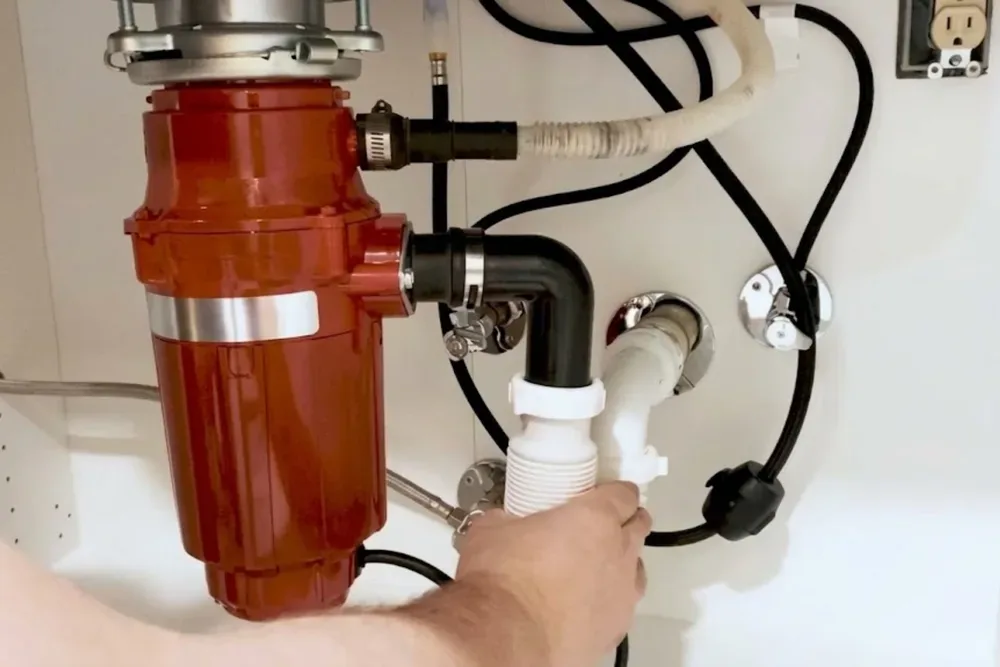
How a disposal visit goes, from first check to final test
Power off and look
The plumber switches off or unplugs the unit, then checks the flange, the drain connections, the dishwasher hose and the underside for leaks or cracks.
Free a jam
A hex key in the center of the bottom turns the motor shaft by hand. The plumber also pulls out what is stuck with tongs, never fingers.
Test the motor and reset
If the unit hums without turning, the shaft is jammed. If it is silent, the red reset button on the bottom and the breaker are checked next.
Run water and confirm
Water runs for several minutes to confirm the unit grinds, drains and does not leak at the flange or the connections.
Emergency disposal trouble: leaks, smoke and a sink full of water
Call right away if the unit is leaking onto the cabinet floor, smells like burnt rubber, or the sink is full of dirty water that will not drain. The 24/7 line is open at night and on weekends, and a dispatcher can offer a same-day appointment when one is available.
A unit that is smoking or sparking is different. Turn off the breaker for it only if you can reach the panel safely, and keep your hands out of the water.
Safe steps while you wait
Turn the wall switch off and unplug the unit if there is a cord. Stop running water into the sink, and place a bucket under a leak. Do not reach into the disposal even when it is off, and do not pour bottled drain opener into a full sink.
Signs your disposal needs help
Humming but not spinning
The motor has power but the flywheel is jammed, often by a bone, fruit pit or a bottle cap.
Silent, no hum
Check the reset button on the bottom and the breaker. A tripped overload cuts power until it cools and is reset.
Water under the sink
A wet cabinet floor can come from the top flange, a side gasket, the drain trap or the dishwasher hose.
Sink drains slowly
A partly clogged trap arm or branch holds water, which the disposal cannot fix.
Burnt smell or grinding
A worn bearing or a stuck object. An old unit that grinds loudly is near the end of its life.
Dishwasher water in the sink
The dishwasher drain hose empties into the disposal, so a clog here can send water back to the dishwasher or the air gap.
Fix it or replace it: how to decide
Repair makes sense when
- The unit is jammed or tripped and the motor runs freely once cleared.
- The leak is at a gasket, the flange putty, or a loose hose clamp.
- The unit is fairly new and sized right for the household.
- The clog is in the trap arm, not in the unit.
Replace when
- The case is cracked or leaking from the body.
- The motor hums and will not turn even after the shaft is freed.
- The unit trips the breaker often.
- The bearings are loud and the unit is old enough that parts cost more than a new one.
Repair is cheaper today, while replacement can be cheaper over the next few years if the old unit keeps failing. A plumber can tell you which side of that line your disposal is on.
LeaksLeaks under the sink: flange, gasket, drain line or dishwasher hose
Find the leak by drying everything, then running water while you watch. If it drips at the top ring, the flange putty or mounting ring has loosened. If it drips from the side where the drain pipe attaches, the gasket or the bolts need attention.
A drip from the dishwasher hose connection often shows up only during a dishwasher cycle. A cracked body is the one leak that always means replacement.
ClogsClogs in the disposal and the kitchen line
When water backs up into the sink, the clog may be in the unit or in the line beyond it. Rice, pasta and coffee grounds swell and pack into a paste, and grease coats the pipe. A plumber can clear the unit and then check the trap and branch, and if the whole line is slow, kitchen drain cleaning is the right next service.
What Summit County says about grease and non-flushables
In Stow, sanitary sewer service comes from Summit County. The county's sewer backup page says backups caused by non-flushable items are not a justifiable claim. A disposal does not make grease safe for the drain, so keep fat and oils out of the sink to protect the kitchen line and the lateral beyond it.
What never goes in a disposal
| Item | Why it causes trouble |
|---|---|
| Grease, oil, fat | Cools into a coating that narrows the pipe |
| Coffee grounds | Pack into a dense paste in the trap |
| Pasta, rice, potato peels | Swell with water and form a gummy mass |
| Bones, fruit pits | Jam the flywheel and dull the impellers |
| Fibrous stalks, corn husks | Wrap around the shredder ring |
| Glass, metal, plastic, wipes | Damage the unit or clog the line downstream |
Disposal installation basics and Stow homes
A new disposal needs a sink with a standard drain opening, a nearby outlet or a switched circuit, and a drain connection that slopes properly. Dishwasher drain hookups on many homes use a high loop or an air gap, and a plumber matches the new unit to the hookup. Electrical work beyond plugging in a cord is a job for a licensed electrician or as the building department directs.
Older Census data puts the median Stow home at 1980, so many kitchens have older sink drains and disposals that have been replaced more than once. The city's 2024 water quality report gives about 7 grains per gallon of hardness on average, and scale can build up on grinding parts and in the trap over time. Permit rules vary by job, so ask the City of Stow Building Department if the work changes plumbing or electrical.
Disposal jammed or leaking right now?
Call the 24/7 line. A dispatcher arranges a licensed plumber to repair or replace it.
Commercial kitchens, such as restaurants, usually need an on-site look because the loads, grease traps and codes differ. The plumber states the price before work starts.
QuestionsGarbage disposal questions from Stow kitchens
The motor has power but the flywheel is jammed. Turn the power off, put a hex key in the center of the bottom, and work it back and forth to free it. Then press the red reset button on the bottom.
Dry the cabinet and run water to see where the drip starts. A top-ring leak or gasket leak can often be repaired. A crack in the body means a new unit.
Yes. The emergency line is open 24/7, and a dispatcher arranges a licensed plumber. Same-day appointments are offered when available.
Repair a unit that is jammed, tripped or has a loose connection. Replace one with a cracked case, a dead motor or loud, worn bearings.
Grease, coffee grounds, bones, pasta, rice, potato peels, fibrous stalks and anything that is not food. The county lists non-flushable items as a backup cause it does not accept as a claim.
The clog is probably in the trap arm or kitchen branch beyond the unit. See drain cleaning for how those lines are cleared.
A clog in the disposal or the line beyond it pushes dishwasher drain water out through the air gap, so clear the clog first.
Often yes. See faucet repair for what that includes, and ask the dispatcher.