
Pick the spot: lowest point or wet corner?
Water in a basement follows the slab slope and the perimeter. The best pit spot is usually where water pools first after a hard rain. That can be the low corner, a spot under a window well, or along the wall where the foundation meets the floor.
Do not guess from the floor drain. Pour a bucket of water on the slab in a few places and watch where it travels, then confirm by watching the basement during a storm.
Pit at the lowest corner
- Catches water that sheets across the slab
- Easy to reach from the main wall
- Works with a single pump
- Best when the slab slopes clearly in one direction
Pit at the wet wall or window well
- Stops water at the entry point
- Helps when seepage is along one wall
- May need an interior drain channel feeding the pit
- Best when the slab is flat but a wall leaks
Look for clues before you choose. White mineral lines on the wall mark where water has dried. A musty smell near one corner, rust on the bottom of a furnace leg, or a dark patch on carpet edges all point to a repeat path.
Homes from the 1960s through the 1990s, which is most of Stow, often have a floor drain and a cove joint where slab meets wall. Water commonly enters at that joint, so the pit may need an interior drain channel that leads to it.
Stow storm water rules and flood history
Stow Codified Ordinance 925.01 prohibits connecting roof drains, downspouts or other storm water conveyances to the sanitary sewer. For a sump pump, that means the discharge line goes outside to the yard or a storm drain and does not tie into the floor drain or a sanitary line. Ask the City of Stow Building Department about the permitted route for your lot.
The city's timeline records record flooding in Stow and Munroe Falls in July 2003. That history is a reason to plan a pump with a backup, especially on low lots. Adell Durbin Park sits on the Stow and Munroe Falls border, which gives a sense of how close the two towns are for drainage questions.
How the install is planned
Find the water path
Watch the slab during rain or test with a bucket. Mark the low point and any entry line along a wall.
Check clearances
The pit needs room for a basin, a float swing, and an outlet within reach. Keep it clear of the water heater, furnace, and laundry drain.
Cut and set the pit
A plumber cuts the slab, digs the hole, and sets a basin with a lid. Gravel below helps water enter and keeps the basin from shifting.
Run the discharge
A rigid pipe leaves through the rim joist or a wall sleeve, with a check valve near the pump. The pipe ends in the yard, sloped away from the foundation.
| Location | Good for | Watch for |
|---|---|---|
| Lowest corner | Slab-wide seepage | Furniture and finished floors in the way |
| Under a window well | Entry water at one point | Tight clearance outside |
| Near the floor drain | Backup route | Do not tie into the sanitary line |
| Near the outlet | Easy power | Not a reason to ignore the low point |
| Utility area | Easy access | Away from heater and furnace |
Pump type and pit size
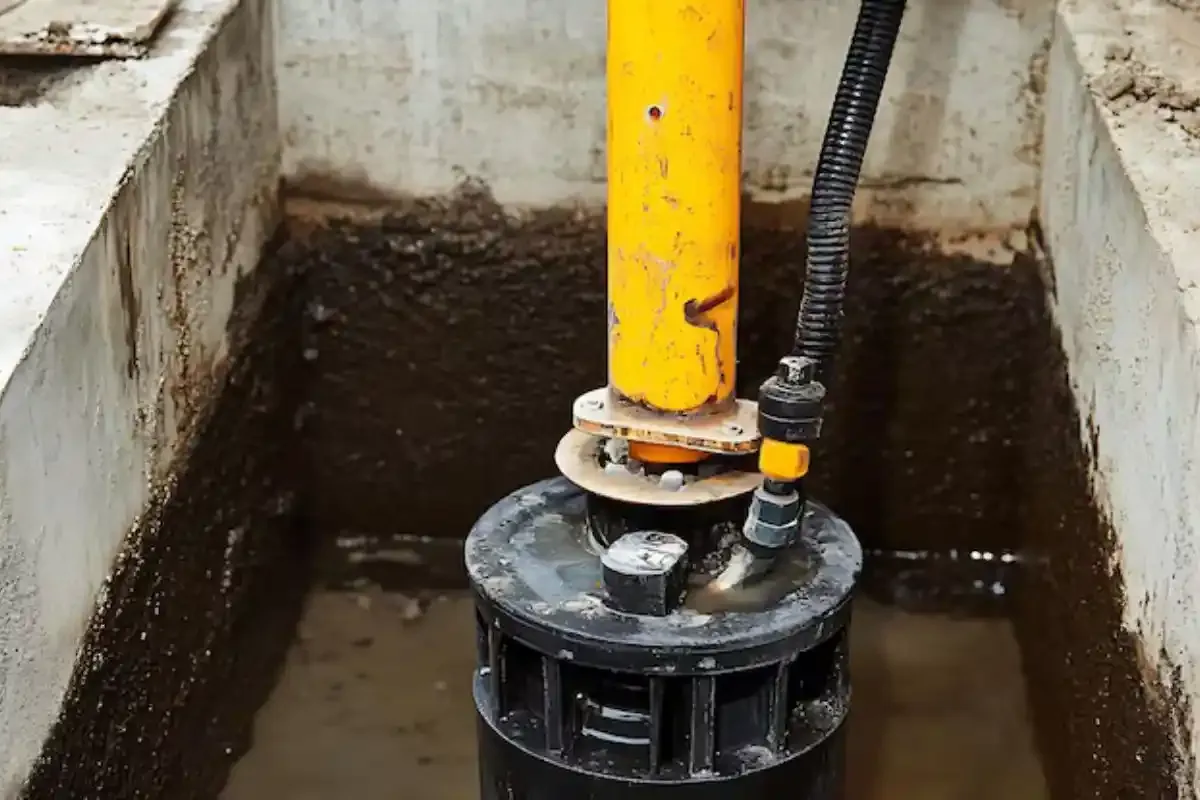
Submersible pumps sit in the pit and are quiet. Pedestal pumps sit on a column above the pit, which makes them easier to reach but louder. Most new installs choose a submersible pump with a check valve and a sealed lid.
Horsepower is less important than lift and inflow. A pump that moves water up and out through a long pipe has to work harder, so the discharge route affects which pump you need.
- Confirm the lowest point with a bucket test or storm watch.
- Locate a GFCI outlet within reach of the pit.
- Plan the exit route and a spot for the pipe to end away from the house.
- Decide whether to add a battery backup.
- Choose a sealed lid and a check valve.
- Ask for a written, clear price before work starts.
Discharge pipe mistakes
Dumping at the foundation
Water that exits next to the wall soaks back into the soil and returns to the pit. Extend the pipe several feet away and slope the ground.
Tying into the sanitary line
This overloads the sewer and conflicts with Stow's ordinance. The discharge goes outdoors.
No check valve
Without one, water in the pipe falls back and the pump cycles over and over.
Freezing at the exit
Northeast Ohio winters can ice up a short outdoor pipe. Plan an exit that drains and can overflow if the end freezes.
When to call a plumber
A pump by itself will not fix a basement that leaks through a failing wall or footing. If water keeps coming even with a working pump, basement waterproofing addresses where the water enters. If you only need the pit set and the discharge routed, sump pump service is the main job.
Homeowners in Munroe Falls and Hudson ask the same placement questions, and the answer starts the same way: watch where the water goes.
Water in the basement now?
Call (855) 575-2890. Dispatch is open 24/7 and takes your address and the problem.
Sump pump placement questions
Stow's ordinance 925.01 prohibits connecting storm water conveyances to the sanitary sewer. The discharge goes outside to the yard or a storm drain, so ask the City of Stow Building Department what suits your lot.
It can, but only if water collects there. Pit placement should follow the water, not the floor plan.
Common basins are about 18 inches wide and 24 inches deep. A plumber sizes it to the pump and the expected inflow.
Yes, and a GFCI-protected outlet is the safe choice. Do not run an extension cord across a wet floor.
Storms often knock out power, which is when the pump is needed most. A backup pump adds protection, especially on low lots.
Some crawl spaces use pits, but access and moisture control differ. A plumber can look at the space first.
Yes, a sealed lid keeps debris out and cuts humidity coming off the pit. It also keeps small objects and children away from the water.
Pour a bucket of water into the pit a few times a year and watch the float lift the pump and clear the water. Test before spring and after any long dry spell.