
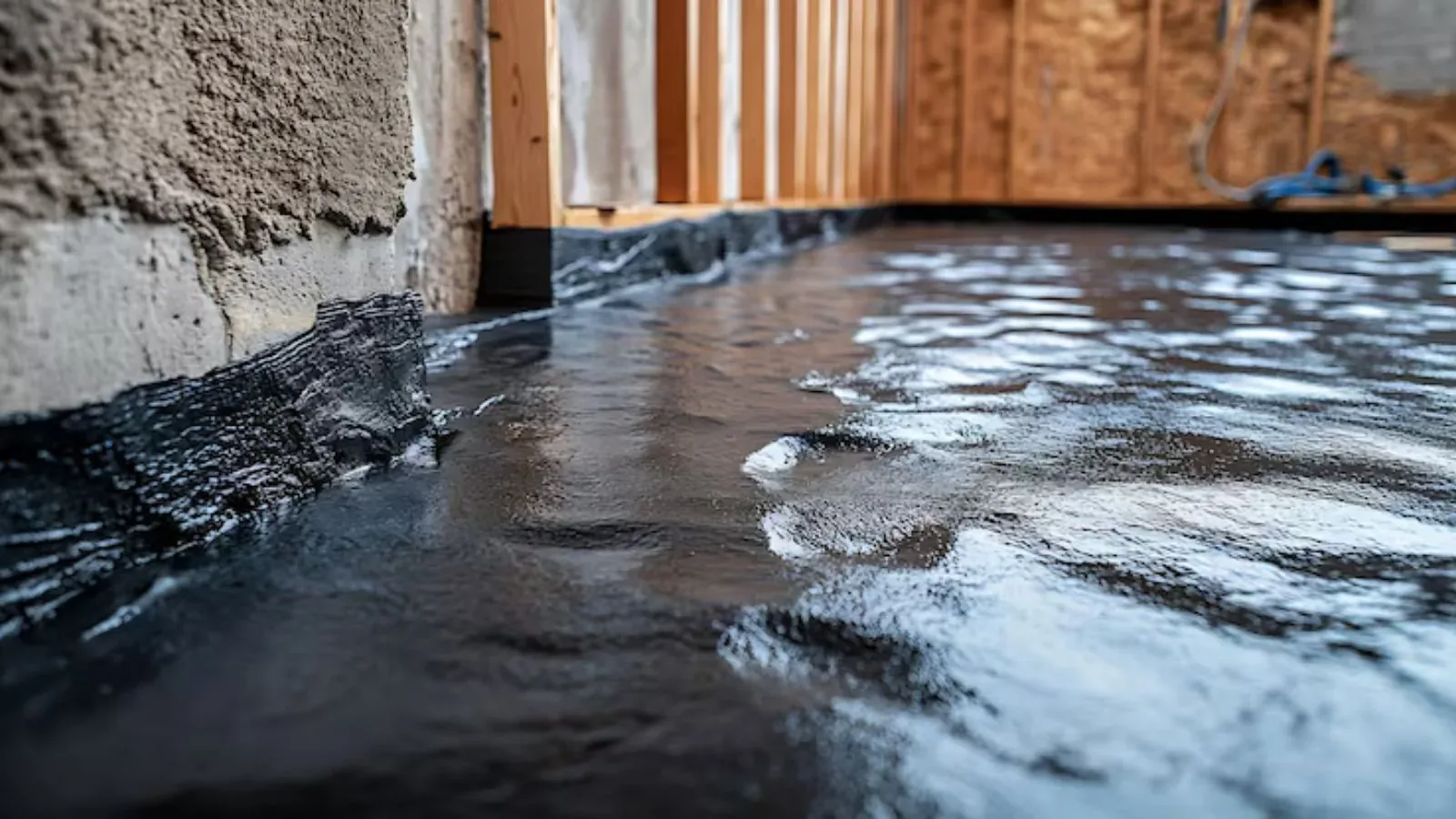
Why water wins against a coating
Soil outside a basement wall holds water after rain and snowmelt. That water presses on the wall and the slab, and it finds every hairline crack and pore in the concrete. Pressure is the key word: a thin coat of paint resists a damp surface, but water under pressure pushes it off.
Concrete block walls are especially porous. Moisture moves through them as vapor and liquid, and it carries minerals that leave white powder on the surface. Paint over that powder and the powder keeps coming, lifting the coating from behind.
| Product | What it does | What it cannot do |
|---|---|---|
| Masonry waterproofing paint | Resists surface dampness on sound walls | Stop active leaks or pressure |
| Epoxy floor coating | Seals slab surface, easy to clean | Cure over a wet slab |
| Vinyl plank with a click lock | Tolerates minor moisture, floats above slab | Handle standing water for long periods |
| Ceramic or porcelain tile | Does not absorb water | Stop moisture rising from the slab |
| Interior drain channel | Moves water to a pit | Act as a finish layer |
A sensible order for the work
- Find the water source: window wells, cracks, the floor-wall joint, or a plumbing leak.
- Fix grading and downspouts outside so roof water leaves the foundation.
- Add a pit and pump or a drain channel if water appears inside during storms.
- Let the slab and walls dry, then test for moisture with a taped plastic sheet.
- Clean off powder and old paint, repair cracks, and apply the masonry coating.
- Install flooring that tolerates moisture, with a gap at the walls.
Preparing walls for masonry paint
Wire-brush loose paint and white mineral powder down to bare masonry. Patch small cracks and holes with hydraulic cement, which sets even on damp surfaces. Let the patches cure before you coat anything.
Apply the paint in two coats with a stiff brush or thick-nap roller, working it into the pores of the block. Check the label for cure time before you move furniture back, since a coating that is not cured can scuff or lift.
A coating also depends on the room staying dry afterward. A dehumidifier and a working sump pump keep the air and slab in a range where the finish lasts, while closed vents or a blocked window well undo that work.
A simple moisture test
Tape a square of plastic sheet to the slab, seal all four edges, and leave it for a day or two. Water droplets under the plastic mean moisture is moving up through the concrete. Droplets on top mean the room air is humid. Either result tells you what to fix before buying flooring.
Mistakes that ruin a finished basement
Painting over active seepage
The coating traps water behind it, then peels in sheets. Wet spots need a drain or exterior fix, not a second coat.
Laying carpet or wood laminate
Both soak up moisture and grow mold. A basement that has flooded before is a poor place for them.
Gluing flooring to a damp slab
Adhesive fails when moisture rises. A floating floor with a vapor barrier handles minor dampness better.
Blocking the floor drain
Covering a floor drain or bolting a wall flat against the slab hides problems and removes an escape path.
Stow basements and what the records say
The City of Stow's timeline records record flooding in Stow and Munroe Falls in July 2003. That is a good reason to treat a damp basement as a drainage question, not a decoration question, and to choose flooring that can dry out. Most Stow homes date from the 1960s through the 1990s, according to older Census data, so many basements have block or poured walls and older drain tile that may be worth checking.
Stow Codified Ordinance 925.01 prohibits connecting roof drains and downspouts to the sanitary sewer. Roof water should be sent to the yard, and a sump pump discharge belongs outdoors too. Paint and flooring are cosmetic, so they do not replace fixing the water source.
When to call a plumber
Call before you paint if you see water entering during storms, a growing damp stain, a musty smell that returns, or a sump pump that cycles constantly. Basement waterproofing deals with where and how water enters. If the pit is missing or the pump is old, sump pump service is often the first fix.
Homeowners in Cuyahoga Falls and Kent face the same choice between finishing and fixing. A plumber can tell you which side of that line your basement is on.
Basement wet before you finish it?
Call (855) 575-2890 and a dispatcher will arrange a licensed plumber to look at the source. Dispatch is open 24/7.
Choosing flooring that survives a damp basement
Good fits for damp basements
- Click-lock vinyl plank that floats above the slab
- Porcelain tile with a proper moisture barrier
- Sealed concrete with a masonry sealer or epoxy
- Rubber tiles in a laundry or workout area
Poor fits for damp basements
- Wall-to-wall carpet
- Solid wood or thin laminate
- Glued sheet vinyl on a slab that has not been tested
- Any flooring over a slab with active seepage
Basement paint and flooring questions
Only for light surface dampness on a sound wall. If water enters through cracks or the floor joint, paint will peel. Fix the water source first, then paint.
Click-lock vinyl plank is a common choice because it floats and tolerates minor moisture. Porcelain tile and sealed concrete also hold up well when the slab is dry.
Run the taped plastic test for a day or two. Droplets underneath mean moisture is rising and the slab needs more work first.
Yes, if the slab is clean and dry. Epoxy cured over moisture can bubble and peel.
A dehumidifier controls air moisture and helps with musty smells. It does not stop liquid water entering.
Yes. Roof water that dumps beside the wall ends up in the soil that presses on the basement. Extend downspouts away from the house, but not into the sanitary sewer.
It will hide it for a while, then show up as stains, odor, or lifted planks. Find the cause before covering the slab.
Wait until the slab passes the plastic test and the walls look dry for several days. Rushing the finish is the most common cause of peeling and mold.
You can, but choose materials that tolerate water and keep drywall off the floor by a small gap. Fix the cause of the earlier flood first.