
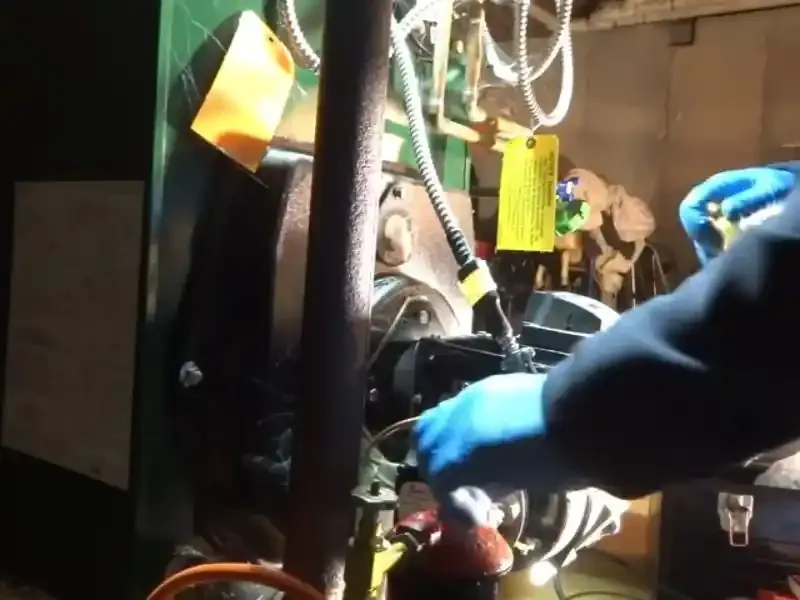
Cold house, warm boiler: what is probably happening
A boiler that runs but leaves rooms cold usually has a water-side fault. Air trapped in a loop, a dead circulator, a stuck zone valve or low system pressure can each stop hot water from reaching the baseboards. If the boiler itself will not fire, the cause may be in the burner or controls, and that needs a heating specialist.
Carbon monoxide and gas smell come first
If a carbon monoxide alarm sounds, get everyone outside and call 911. Never ignore the alarm or reset it and go back in. Keep detectors on every floor and near sleeping areas, and replace them on the maker's schedule.
If you smell gas, leave the building right away and call 911 or the gas utility from a safe place outside before calling a plumber. We make no promise about a gas response.
Check the thermostat
Confirm it is set to heat and the batteries are fresh before assuming the boiler failed.
Read the pressure gauge
Note the number on the gauge and whether it moves. Do not add water to a hot boiler.
Feel the pipes
Warm supply pipes at the boiler with cold pipes beyond a certain point suggest air or a stuck valve.
Look for drips
Place a towel under any wet joint and note where the water comes from.
Signs your heating loop needs service
Cold radiators on upper floors
Air collects at the high points and blocks flow. Bleeding the radiator vent often fixes it, but repeated air means a leak or a failing air separator.
Banging or gurgling pipes
Trapped air, low water or a failing circulator make the loop noisy.
Pressure that drops or spikes
A pressure gauge that falls usually means a leak. One that climbs high may mean a bad expansion tank.
One zone cold, others warm
A stuck zone valve or a dead zone thermostat is the usual cause.
A dripping relief valve
The valve is opening because pressure or temperature went too high, or its seat has worn.
Rust-stained water at joints
Slow weeping leaves red-brown stains on fittings and the floor beneath them.
Why Stow houses wear out their heating loops
Older Census data puts the median Stow home at about 1980, and about 18 percent were built before 1960. Homes from that era often have iron or copper heating loops that have been through many winters. Northeast Ohio's long heating season, with cold stretches and thaw cycles, keeps pumps, valves and joints working through the autumn and spring as well.
Stow's water averages about 7 grains per gallon, according to the city's 2024 water quality report. Fresh makeup water carries minerals that deposit inside a boiler, so a system that loses water often will scale faster. That is one reason a slow leak deserves attention, and leak detection can find a hidden one under a floor or in a slab.
How the plumber finds the fault
| Part | What the plumber checks |
|---|---|
| Pressure gauge and fill valve | System pressure, makeup water use |
| Expansion tank | Air charge, waterlogged bladder |
| Circulator pump | Motor noise, flow, flanges |
| Zone valves | Whether the motor opens the valve |
| Relief valve | Seat leaks, discharge pipe |
| Air vents and separator | Trapped air at high points |
Gauges, a pressure test and a hand on each pipe tell a lot. The plumber compares supply and return temperatures, listens to the pump, and checks whether a thermostat call opens the right zone valve. A faulty relief valve or a bad expansion tank is usually clear in the first few minutes.
Repair options for common failures
Repair makes sense when
- A pump, zone valve or expansion tank is the single bad part
- Piping leaks at one joint or fitting
- The boiler is sound and the loop only needs air removed
Replace when
- The boiler heat exchanger leaks or is cracked
- Repairs have piled up and parts are scarce
- Rust has spread through the main loop
Boiler replacement is a larger job, and a plumber will tell you if the problem falls outside the plumbing side. New piping, relocated radiators or a combined hot water setup is a project covered under plumbing installation. Homes with a separate tank for domestic hot water can also see water heater repair.
Heat not reaching the rooms?
Call (855) 575-2890 and a dispatcher will take the details and arrange a licensed plumber for your Stow home.
What decides the price
Boilers are often the biggest appliance in the house, so ask for the cost of repair beside the cost of a replacement before deciding.
How a boiler visit works
You call and describe it
Give the dispatcher your address, the boiler type and what the radiators are doing.
The plumber looks at the loop
Gauges, pump, zone valves and the expansion tank are checked in a set order.
You get a clear price
Parts and labor are explained before any repair begins.
Repair and test
Air is purged, pressure is reset and each zone is run to confirm it heats.
Annual service before the heating season catches weeping valves, tired pumps and low charge in the expansion tank. A burner cleaning and combustion check are a heating specialist's work, so book both if your system needs them. Neighbors in Cuyahoga Falls can read how a visit works on the Cuyahoga Falls plumber page.
QuestionsBoiler and baseboard heat questions
Trapped air, a failed circulator or a stuck zone valve are the usual causes. A plumber can bleed the system and test each part.
A slow leak is the most common reason. The leak may be at a joint, the relief valve or the expansion tank, and it sometimes hides under a floor.
Our plumbing service covers leaks, valves, pumps, piping and expansion tanks. Burner or combustion problems may need a heating specialist, and the dispatcher will tell you.
Turn the small vent screw with a key until air hisses out, then close it when water appears. Keep a towel ready, and check the gauge afterward.
Leave the house and call 911. Do not go back inside until responders say it is safe.
Once a year, ahead of the heating season. A visit before the cold stretch catches worn parts while a repair is easy to schedule.