
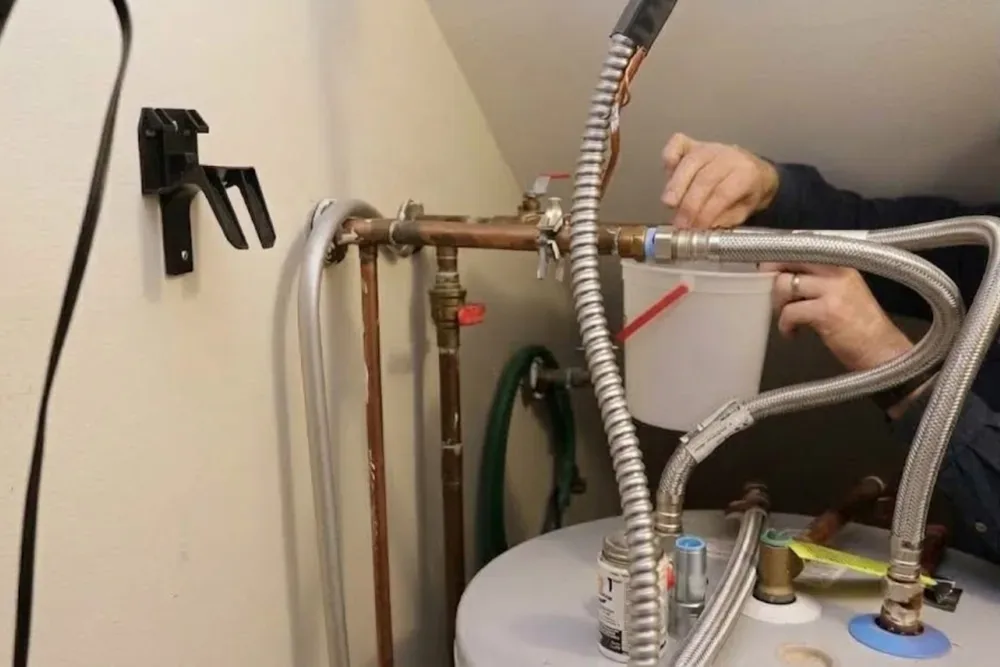
Normal moisture or a real leak?
Before you panic, look at where the water is and what it looks like. A thin trickle from a small plastic pipe at the bottom of the unit is often condensate, which is normal on a high-efficiency model. Water that beads on the copper pipes, rolls down the front panel, or pools under the whole unit is a different story.
The quick sorting below covers the common cases. Use it as a first look, not a diagnosis, because the same puddle can have more than one cause.
Usually harmless
- Clear water dripping from the plastic condensate line on a condensing unit
- A little moisture right after a hot shower, then dry again
- Brief dampness on the exhaust pipe from combustion steam
- One small drip while the unit is cooling after a long run
Needs attention now
- Water on the floor that keeps coming back after you wipe it
- Drips from a copper pipe joint, valve, or the bottom of the casing
- Rust-colored or white crusty trails on fittings
- An error code on the display along with any water, or a hissing sound
What Stow water means for a tankless unit
Stow buys its water from the City of Akron. The city's 2024 water quality report lists hardness at about 7 grains per gallon on average, which is moderately hard. That water leaves scale inside a tankless heat exchanger, where the metal is thin and the water passages are narrow.
Scale makes the unit run hotter and work harder, and over years it can stress the exchanger until a pinhole opens. A yearly flush with descaling solution slows that buildup. The city also says hydrant flushing can temporarily change water pressure. That rarely causes a leak, but a tired fitting may weep for a day or two after a pressure swing, so note the date if you see new seepage.
Where tankless units actually leak
Most leaks start at connection points, not in the middle of the machine. The unit has hot and cold water lines, a gas line on gas models, a pressure relief valve on some installs, and isolation valves. Every joint is a place for a washer to dry out.
Heat exchanger leaks are the serious ones. They tend to show up as water inside the cabinet, often with mineral staining. A cracked exchanger usually means repair costs close to the value of the unit, which is why the repair-or-replace talk belongs with a plumber who has the model number in hand.
| Where | Likely cause | DIY check |
|---|---|---|
| Inlet filter screen | Cracked housing or dry gasket | Look for drips at the cold inlet, do not over-tighten |
| Isolation valves | Worn handle packing | Dry the valve and watch for new beads |
| Copper or flex lines | Loose or corroded joint | Check for green or white crust |
| Condensate line | Blocked drain or neutralizer | Clear water at the plastic tube is normal |
| Heat exchanger | Scale stress, freeze damage, age | Water inside the cabinet means stop and call |
What to do in the first ten minutes
Turn the unit off
Switch off the power at the wall outlet or breaker. On a gas model, turn the gas valve handle a quarter turn so it sits crosswise to the pipe.
Close the water
Shut the cold inlet isolation valve on the unit. If you cannot reach it or it will not turn, close the main water valve for the house.
Dry and watch
Wipe the area with a towel, then check again in a few minutes. A drip that returns tells you the leak is active, and the spot where it forms points to the source.
Take photos and the model label
Snap the label and the wet area. A plumber can pre-sort parts and likely causes from those details.
Gas smell means leave first
If you smell gas near the unit, leave the building right away. Call 911 or the gas utility from a safe place outside, and do not touch light switches or use phones inside. Call a plumber only after that.
Mistakes that make a small leak bigger
Wrenching a fitting tight
Over-tightening cracks plastic filter housings and crushes washers. Snug is enough, and a leak that survives snug needs a new part.
Ignoring a slow drip
A bead that forms every hour soaks the wall behind the unit and can corrode the electronics below it. Small leaks get expensive when they reach a control board.
Skipping the annual flush
Scale is the quiet cause behind many failed exchangers. Moderately hard water makes the flush more worth doing.
Plugging the condensate drain
Kinked or blocked condensate tubing backs acidic water into the unit. Keep the line sloped and open to the drain.
When to call a plumber
Call when the leak returns after wiping and tightening, when you see water inside the cabinet, or when the unit shows an error code along with moisture. Also call if the unit is old and the fittings are corroded, since fixing one joint often exposes the next weak one.
If water is running and you cannot stop it, the 24/7 emergency line takes the address and problem and arranges a licensed plumber. For a leaking unit that is shut off and dry, a water heater repair visit is the usual next step. If the exchanger is the problem, the conversation moves to tankless water heater replacement or a new install.
Tankless unit leaking right now?
Shut off the power and the inlet valve, then call (855) 575-2890. Dispatch is open 24/7 and takes your address and the problem.
Homeowners in Munroe Falls and Hudson nearby share the same Akron water and the same scale problem, so these checks apply there too.
QuestionsTankless leak questions homeowners ask
Water near live wiring and gas connections is a safety issue, so shut off power and gas first. A small drip at a fitting is mostly a property damage risk. Water inside the cabinet or any gas smell is urgent.
Condensate comes from the small plastic drain line, looks clear, and appears only while the unit has been firing. A real leak shows up at copper joints, valves, or the casing, and it keeps returning when the unit is idle. Stow's moderately hard water also leaves white crust where a real leak has been weeping.
Not in the same way, because it holds only a small amount of water. A cracked heat exchanger can still release water into the cabinet. That is usually slower than a tank failure.
The common sources are the condensate line, the inlet filter, and isolation valves. Wipe it dry and trace the drip upward. If you cannot find the source, shut the unit off and have it checked.
It can, indirectly. Scale narrows the heat exchanger passages and raises operating temperatures, which stresses the metal. Flushing the unit on a regular schedule reduces that wear.
Tightening a loose union or replacing a clean inlet filter gasket is reasonable. Anything involving gas, venting, the heat exchanger, or electrical parts belongs with a licensed plumber.
That depends on the manufacturer's terms and how the unit was installed and maintained. Check the paperwork and have the model and serial number ready when you call.