
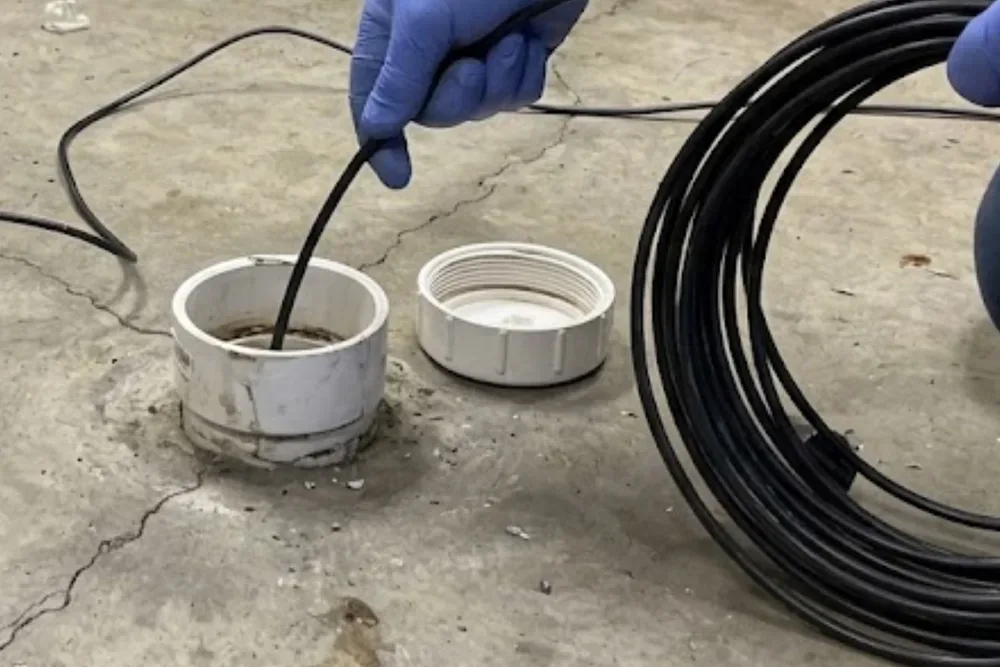
What the lateral is and where it runs
The lateral is the last stretch of your drain system. It leaves the house, usually through the basement wall or slab, and runs underground to the sewer main in the street or an easement. Every sink, shower, toilet and washer on the property drains into it.
Because it sits underground, you cannot see what is happening until water backs up. A camera inspection turns a hidden pipe into something you can look at on a screen, with the plumber pointing out what each image means.
Why laterals fail
Tree roots are the classic cause. They find tiny joint gaps, grow inside the pipe, and catch paper and grease until the line clogs. Roots show up on camera as fuzzy white or brown mats at the joints.
Older materials fail in their own ways. Homes from the 1960s and 70s often have cast iron or clay drains, which can scale, crack or separate at joints. Homes from roughly the late 1970s through the 1990s mostly have plastic drains, which hold up well but can sag if the trench was not compacted. Older Census data puts the median year Stow homes were built at 1980, so a mix of materials is normal in town.
Ground movement adds to the wear. Freeze and thaw cycles, heavy rain and old trench fill can shift a pipe until a joint opens or a low spot forms where water and waste sit. Grease and wipes labeled flushable finish the job by building blockages on those rough spots.
How the inspection runs, step by step
Find the cleanout
The plumber locates the access point, usually a capped pipe in the basement or a spot outside near the foundation. If none exists, the camera may go in through a toilet flange or roof vent, which is slower.
Clear loose debris
If the line is heavily blocked, it may need a cleaning pass first so the camera lens can see the pipe wall rather than a wall of waste.
Run the camera
The camera head travels toward the main with its lights on. The plumber watches for roots, cracks, belly spots, offset joints and scale, and notes how far along the line each one sits.
Locate and report
A locator tool can trace the camera head from above ground, so the depth and position of any problem are known before anyone digs. You get a plain-language walkthrough and a recommendation.
Most inspections give an answer the same day. The video can usually be saved so you can review it later, or show it to a buyer, an insurer or another contractor.
| On camera | What it often means | Typical next step |
|---|---|---|
| Fuzzy mats at joints | Root intrusion | Cleaning, then watch or repair |
| Standing water in a dip | Belly or sag in the pipe | Monitor, or repair that section |
| Open or offset joint | Ground movement or poor fit | Spot repair or liner option |
| Flaking, rough walls | Corroded cast iron | Plan replacement of that run |
| Clear, smooth pipe | Blockage was a one-off | Maintenance and habits |
That table is a starting point, not a diagnosis. A short break in a plastic pipe is a very different job than a long run of failing clay. If the camera finds damage, sewer line repair options range from a single spot fix to full replacement, depending on depth, length and access.
When to call a plumber for an inspection
Book an inspection if more than one drain backs up at once, if the basement floor drain gurgles, if a main line clog comes back after cleaning, or if you are buying a home. A sewer inspection is also smart before a landscaping project, a new deck footing, or a driveway pour over the line.
If sewage is rising through a floor drain or tub right now, stop using water and call the 24/7 line. Wastewater in a living space is a health risk, so keep children and pets away.
Need a camera look at your lateral?
Call and a dispatcher takes your address and the problem, then arranges a licensed plumber. Same-day appointments when available. Call (855) 575-2890.
Who handles sewer questions in Stow
The City of Stow does not provide or maintain sanitary sewer service. Homeowners contact the Summit County Department of Environmental Services at 330-926-2400, and the after-hours line is ext. 1. The county page on sewer backups does not say who owns the lateral, so ask the county directly. It does say that backups caused by private lateral obstructions, extreme weather or non-flushable items are not a justifiable claim.
Sanitary sewer permits are not handled by the Stow Building Department. Applications go to the Summit County Department of Sanitary Services, 330-926-2409. Stow Codified Ordinance 925.01 also bars connecting roof drains and downspouts to the sanitary sewer, so a camera that finds clear roof water entering the line is a finding to act on.
Rules differ by town. In Kent, which is in Portage County, Codified Ordinance 915.05 makes the property owner responsible for the lateral up to and including the wye. That is a Kent rule, not a Stow one. Homeowners in Cuyahoga Falls and Hudson should likewise confirm their own city's rules.
Septic or public sewer: check first
Some Summit County homes are on septic systems instead. Summit Public Health says about 33,000 homes in the county have septic systems. A quick check: if you receive the quarterly county sewer bill, you are usually on public sewer. A septic home has a tank and a leach field instead of a lateral running to a main.
QuestionsSewer lateral inspection questions in Stow
The county's sewer backup page does not say who owns the lateral, so ask Summit County Department of Environmental Services at 330-926-2400. The page does say private lateral obstructions are not a justifiable claim, which suggests a plumber is the first call for a clog on your side.
A straightforward run is often done within a single visit. Heavy blockages, deep cleanouts or long runs can stretch the visit, because the line may need clearing first.
It is a smart extra check, especially on a house with mature trees or older drains. The video shows pipe condition that a standard home inspection cannot see from above ground.
No. The cable is flexible and the head is rounded. Brittle or collapsed pipe can stop the camera, but that stopping point is itself a useful finding.
Cleaning clears the blockage. The camera shows why it formed. If roots, a sag or a cracked joint caused the clog, drain cleaning alone gives only temporary relief.
You can look at a cleanout cap and notice warning signs such as gurgling or slow drains. You cannot see inside the pipe without a camera. Pushing a cable in blindly can snag a root or break a weak joint.
Then ask Summit County Department of Environmental Services, since the main is the county system. A plumber can show the footage and point out where your pipe meets the main, and you can bring that video to the county.