
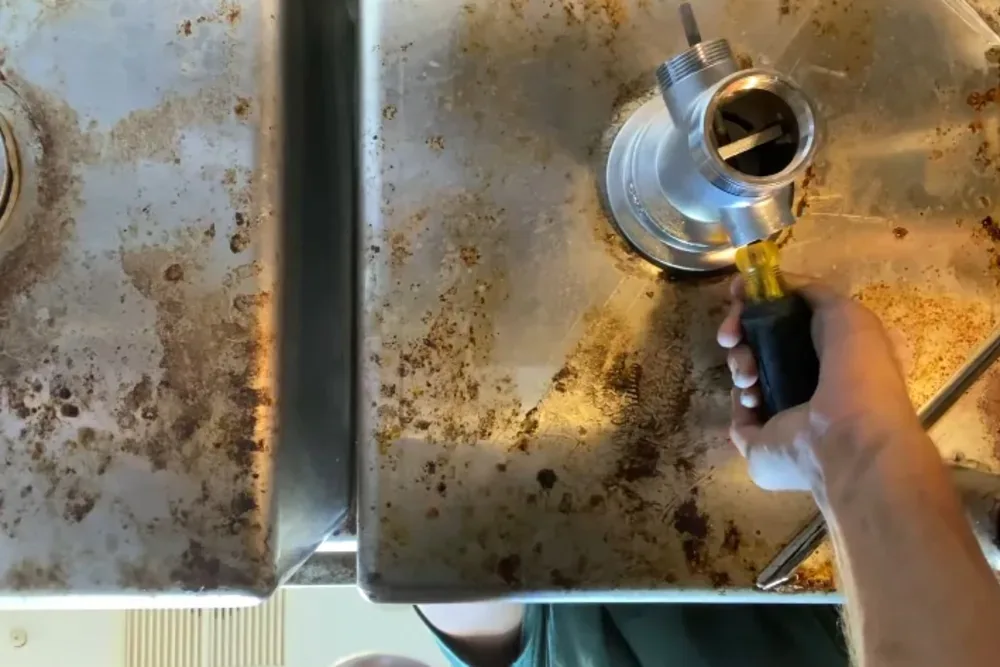
A commercial plumbing emergency after hours
Business plumbing emergencies rarely wait for a convenient hour. A broken supply line behind a restaurant wall, a floor drain pushing water across a shop floor, or a toilet overflowing in a shared restroom can ruin stock, flooring and drywall before the next morning. The first few minutes matter more than anything a plumber does later.
Everyone who opens or closes your building should know where the main shutoff is and how it turns. Many sit near the meter, in a utility room or in a mechanical closet. A valve that has not moved in years may be stiff, so it is worth finding it before the night it counts.
Water near electrical equipment
If water is reaching a breaker panel, a wall outlet, a walk-in cooler compressor or a floor-mounted machine, stay away and shut off power only if you can reach the switch while standing on dry ground. Otherwise leave it and tell the dispatcher when you call. If you smell gas, leave the building, then call 911 or the gas utility from outside before you phone a plumber.
Close the main shutoff
Turn the main water valve clockwise until it stops. If the leak is on one fixture, its own stop valve under the sink or behind the toilet may be enough.
Stop feeding the drain
Tell staff to stop using sinks, dishwashers and toilets that share the backed-up line. More water down a blocked drain only adds to the overflow.
Protect what you can
Lift boxes, paper goods and electronics off the floor. Mops and a wet vacuum help, but do not wade into standing water near live equipment.
Know your building
Have the street address, the unit or suite, and any access or alarm details ready. If the building has a property manager, note who holds the keys.
Floor drains, lift pumps and restroom overflows
Floor drains do quiet work until they stop. In a shop or back-of-house kitchen they carry mop water, equipment drips and washdown. When one overflows, the cause is often a clogged trap, a blocked branch line, or a lift or ejector pump that has stopped moving water up to the sewer. Callers describing these jobs often mention a drain grate that must come off right now, or standing water that will not leave.
A lift or ejector pump sits in a sealed pit below the slab or basement floor and pushes waste uphill. If its float sticks or the motor burns out, the pit fills and water shows up at the lowest fixture. A pump alarm, a gurgle from a floor drain, or a restroom that drains slowly after a flush are the usual early warnings.
Restroom overflow
A toilet that rises and will not settle usually points to a blockage in the branch or the main. Flushing again makes it worse.
Floor drain gurgling
Air bubbling up through a drain while another fixture runs means the line is partly blocked or poorly vented.
Pump alarm or silence
A lift pump that hums without moving water, or one that never runs while the pit is full, has a failed impeller, float or motor.
Standing water that stays
Water that sits in a floor drain for hours points to a deeper blockage than a surface clog.
Sewage smell indoors
A dry trap, a cracked pipe or a failed seal can let sewer air in. Treat a strong smell as a reason to call, not to air out and wait.
Water in the wrong room
A wet ceiling tile, a damp wall base or a soft spot in the floor can mean a supply or drain leak hidden behind finishes.
Commercial drain and grease problems
Kitchens, bakeries and food prep spaces send fat and food solids down their drains, and those solids harden in the pipe. A grill line or three-compartment sink that drains slower each week is telling you something. Our commercial drain cleaning work uses cable machines to clear the blockage, and heavier buildup may call for a different method once a plumber has seen the line.
We do get calls asking about grease trap cleaning and pumping. Ask the dispatcher when you call so we can tell you plainly whether the work fits what we send out or needs a hauler who pumps traps. A trap that is overdue and full will push grease downstream, which is how a small maintenance task becomes a restaurant-wide backup.
Water on the floor of your business right now?
Call (855) 575-2890 and a dispatcher will take the address and the problem and arrange a licensed plumber.
Backflow testing for Stow businesses
A backflow preventer is a valve assembly that keeps used or contaminated water from flowing back into the drinking supply. Businesses most often have one on a fire line, an irrigation system, a boiler feed or a commercial kitchen connection. Stow runs a backflow prevention program: devices must be tested annually, and the system has over 1,500 approved devices.
If your building has a device, plan on a test every year and keep the paperwork where the next manager can find it. Callers often tell us a notice arrived and they are not sure when the last test happened. Ask the City of Stow how your device is recorded, and tell the dispatcher what kind of device it is and where it sits so the right visit can be arranged.
Leak detection in commercial buildings
Commercial leaks are harder to chase than a leak under one sink. Pipes run through ceilings, walls, slabs and shared chases, and a water bill that keeps climbing may trace to a line nobody can see. Our leak detection page explains the tools a plumber uses, such as acoustic listening gear and thermal imaging.
Here is the honest part. Commercial jobs usually need an on-site look before anyone can say what the fix involves. A plumber cannot tell you over the phone whether you have a pinhole in copper, a failed fitting or a buried line, so treat any early talk as a starting point.
| Problem | Likely source | First step |
|---|---|---|
| Floor drain overflowing | Blocked trap or branch line | Stop water use, call |
| Restroom toilet rising | Branch or main blockage | Do not flush again |
| Pit full, water at low fixture | Failed lift or ejector pump | Note any alarm, call |
| Slow kitchen drains | Grease buildup in the line | Cut fat going down |
| Climbing water bill | Hidden leak or running fixture | Check meter with water off |
Water heaters and restroom fixtures
A business water heater works hard, and Stow water arrives at about 7 grains per gallon on average, according to the city's 2024 water quality report. That is moderately hard water, which leaves scale on heating elements and the tank bottom. A heater that rumbles, runs out early or leaks at the base needs a look, and our water heater repair page covers what that visit involves.
Restroom fixtures cause plenty of calls too: running toilets, loose flush valves, leaking faucets and failing supply stops. Fixing a small fixture problem early is far cheaper than cleaning up after one that was left to run all weekend.
Property managers and multi-unit buildings
Small multi-unit buildings add a layer of complication. A tenant calls about a backup, but the blockage may sit in a shared line serving three units, or the leak may start in the unit above. Tell the dispatcher which unit is affected, whether neighbors see the same symptom, and who can give access after hours.
Repeated calls for the same drain are a pattern worth reporting. Picture a four-unit building where the first-floor kitchen backs up every few months: that is usually a shared line problem, not a tenant habit, and it deserves a camera look or a deeper clearing rather than another quick fix. We also cover nearby towns, including Hudson, when your portfolio spans more than one.
A repair makes sense when
- The problem is one fixture, valve or short pipe run
- The pipe is otherwise sound and accessible
- The building is leased and the fix must be quick
- A part, such as a float or flush valve, has failed
Larger work makes sense when
- The same line backs up again and again
- A pump pit has failed repeatedly
- Pipe is corroded or leaking in several places
- A shared stack serves many units
Because every building differs, the plumber looks first and then states a clear price before work starts. If a property insurer is involved in water damage, ask what documentation they need, and keep photos of the damage before cleanup.
How a commercial plumbing visit works
You call
The dispatcher takes the address, the business type and what is happening. Say if water is still running.
A plumber is arranged
A licensed plumber is sent when available, with same-day appointments when available for non-urgent work.
On-site look
The plumber inspects the drain, pump, fixture or pipe, and explains what the problem actually is.
Price, then work
You get a clear price before work starts. After approval, the repair is made and tested.
Licensing: what Ohio requires and how to check
The state of Ohio licenses commercial plumbing contractors through the Ohio Construction Industry Licensing Board. A business can confirm a contractor's license on the Ohio eLicense lookup before hiring. We do not publish a license number on this page, so ask the dispatcher any questions about who will do the work and they can answer before anyone is sent.
Residential plumbing contractors are handled differently, and the local building department decides registration. For commercial work, the state license is the check that counts. For permits, ask the City of Stow Building Department before work starts.
QuestionsQuestions Stow business owners ask about plumbing emergencies
Close the main water shutoff if water is still spreading, and stop using fixtures that drain to the affected line. Keep people away from wet areas near outlets and panels, then call so a dispatcher can arrange a licensed plumber.
Backflow testing is something callers ask about often. Stow requires devices to be tested annually, and the system has over 1,500 approved devices. Tell the dispatcher the device type and location so we can say whether and how the visit can be arranged.
Yes, the emergency line is open 24/7 and a dispatcher answers. They take the address and the problem, then arrange a licensed plumber. After-hours work is priced clearly before it starts, and same-day appointments are offered when available.
We get these calls often. Ask the dispatcher about your trap size and location so we can tell you honestly if it fits the work we send out. Some traps need a hauler with a pump truck, and we would rather say so than send the wrong crew.
No. Commercial jobs usually need an on-site look before anyone can say what the fix involves. Our leak detection page lists the tools used once a plumber is at the building.
It depends on where the blockage sits. A clog inside your own lateral is usually a plumber call first, and a plumber can tell whether it is private or in the county main. Summit County's backup page says private lateral obstructions are not a justifiable claim.
Ohio licenses commercial plumbing contractors through the Ohio Construction Industry Licensing Board, and the Ohio eLicense lookup lets you verify one. The dispatcher can answer questions about who will do the work.