
Toilet problem or house problem?
Likely a toilet clog
- Only this toilet is slow or blocked
- Water rises when flushed but drains in minutes after plunging
- Other sinks and the tub drain normally
- Someone flushed extra paper or a wipe
Likely a main line problem
- Two or more fixtures back up together
- Water gurgles in the tub when you flush
- A floor drain or basement fixture bubbles
- The toilet clogs again right after clearing
Sewer backups in Stow
Stow homes connect to Summit County sanitary sewer, not a city system. The county's backup line is 330-926-2400, and the after-hours line is 330-926-2400 ext. 1. Summit County's sewer backup page names non-flushable items as a cause it does not treat as a justifiable claim.
That means a toilet clog made of wipes or paper towels is usually a house problem. If several drains back up together, a plumber can find out whether the blockage is in your own lateral or in the county main. Call the plumber first, and call the county if the plumber finds the main is the cause.
How to clear a clogged toilet, step by step
Stop the water
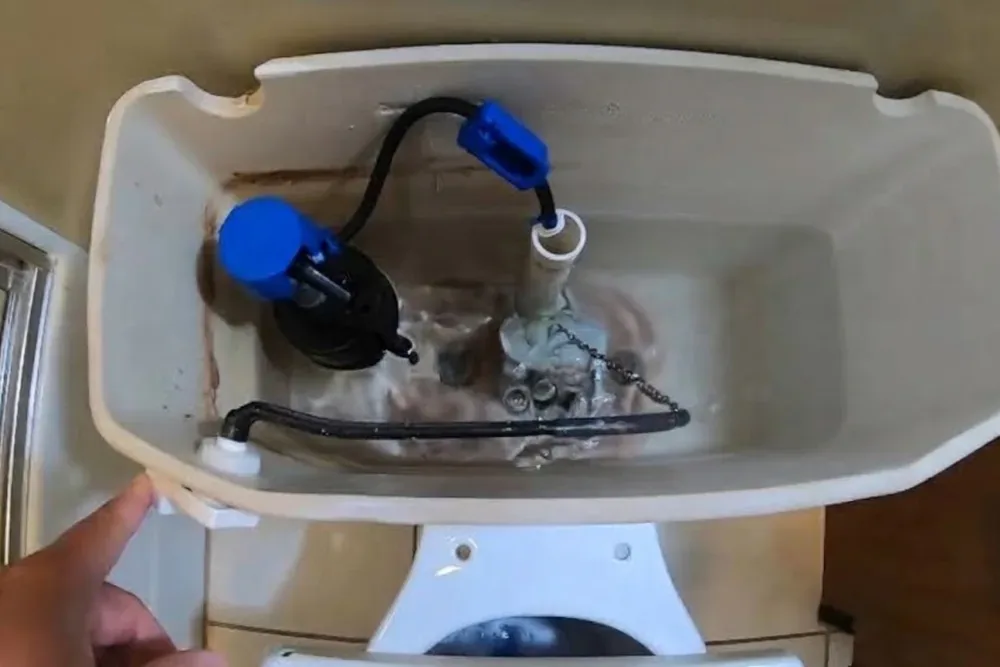
Lift the tank lid and push the rubber flapper down so no more water enters the bowl. If the bowl is rising, turn the valve behind the toilet clockwise.
Protect the floor
Lay towels or newspaper around the base and put on rubber gloves. A bucket nearby helps if you need to bail water.
Use a flange plunger
Seat the rubber flange inside the drain opening and press down gently first to push out air. Then plunge with firm, steady strokes for about 20 seconds.
Test with a small flush
If the water drains, let the tank refill, then flush once. Do not repeat a full flush while the bowl is still high.
Try a toilet auger
If the plunger fails, feed a closet auger into the drain, crank slowly and pull out the blockage. Keep the cranking gentle to avoid scratching the porcelain.
Choose the right plunger
A cup plunger, flat on the bottom, is for sinks and tubs. A flange plunger has an extra rubber sleeve that fits into the toilet drain. Using the wrong one wastes effort and can splash dirty water.
What is happening inside the bowl
Every toilet has a curved channel molded into the base, called the trap. It holds a seal of water that blocks sewer gas, and it is the narrowest part of the path, usually around two inches wide. Paper and waste have to squeeze through that bend, so a small mass can stick there even when the drain beyond it is clear.
Plunging works by pushing water back and forth against the plug until it breaks apart. A closet auger does the same job mechanically. If neither moves it, the blockage may be a solid object, such as a toy or a brush head, and the toilet may need to be lifted off the floor.
Skip theseMistakes that make a clog worse
Flushing again and again
Each flush adds water to a blocked bowl. If the bowl is still high, wait and plunge instead.
Pouring chemical cleaners
Caustic products can sit in a blocked bowl, splash a person who plunges, and damage the wax ring or the finish.
Using a wire coat hanger
A hanger scratches porcelain and can push the clog deeper. A closet auger has a protective sleeve for this reason.
Ignoring the second sign
A bubbling shower or a gurgling sink after a toilet clog means the blockage is further down the line.
When it is time to call a plumber
Stop and call if you see these
Call when plunging fails after several tries, when the toilet clogs again within a day, or when water leaks from the base. Call right away if sewage appears in a tub, shower or floor drain, because that points to the main line.
A plumber can pull the toilet and check for a lodged object, replace worn parts through toilet repair, or clear the pipe behind it with drain cleaning. Our 24/7 line can send a dispatcher to arrange a licensed plumber, and homeowners in Kent and Hudson make the same call when a toilet will not clear.
Toilet will not clear?
Call and a dispatcher will take your address and arrange a licensed plumber.
What to keep out of the toilet
| Item | Why it clogs | Where it belongs |
|---|---|---|
| Wipes labeled flushable | Do not break down in the pipe | Trash |
| Paper towels and tissues | Thicker fibers mat together | Trash |
| Feminine products | Swell with water | Trash |
| Cotton balls and swabs | Snag on pipe joints | Trash |
| Excess toilet paper | Too much at once forms a plug | Flush in smaller batches |
Low-flow toilets rely on a smaller volume of water, so they are less forgiving of heavy loads. If your toilet is older and clogs often, the trap may have scale inside. Stow's city water is about 7 grains per gallon on average according to the 2024 city report, and that moderately hard water can leave mineral build-up in the jets under the rim over time.
QuestionsClogged toilet questions
If only one toilet is blocked, it is almost always a house issue. If several fixtures back up together, the main line may be the cause, and a plumber can tell whether it is your lateral or the county main.
Summit County's backup page says private lateral obstructions and non-flushable items are not a justifiable claim, so call a plumber first.
Lift the tank lid, push the flapper closed and turn the valve behind the toilet clockwise. Mop up with towels and keep people away from the water.
Yes, but a very full bowl may splash. Bail a little water into a bucket first, then seat the flange plunger and press slowly.
Frequent clogs can come from a worn flush, too much paper, or a partial blockage deeper in the drain. If it happens often, have a plumber check the toilet and the line.
Avoid it. Caustic cleaners can sit in a blocked bowl and are hazardous if you plunge. They are also hard on old pipes.
Yes. An overflowing bowl can soak the bathroom floor and seep into the ceiling below. Shut off the water and call for help before the damage spreads.
A closet auger is a reasonable tool for most homeowners. If it does not clear the blockage in a few minutes, a plumber has stronger equipment.