
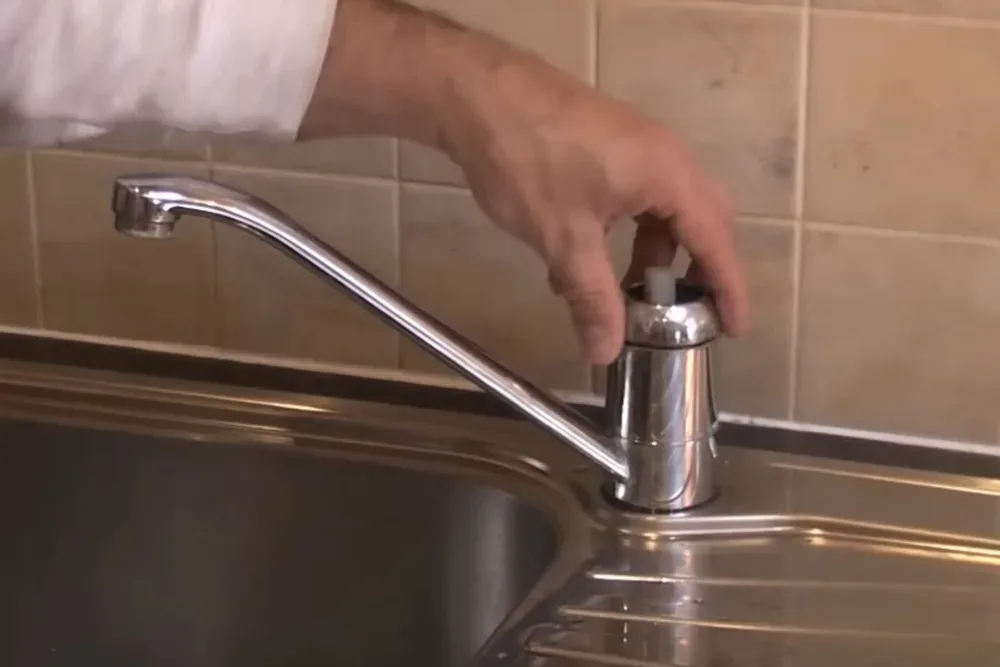
Why a faucet starts to drip
Every faucet has a part that presses against a seat to stop the water. Over time that part hardens, cracks or wears flat, and water slips past it. The drip is just the first sign that the seal has lost its grip.
Which part fails depends on the design. Old compression faucets, the kind with separate hot and cold handles that you crank down, use a rubber washer on the end of a stem. Single-handle faucets use a cartridge or a ball assembly. Ceramic disc faucets use two polished discs that can chip or collect grit.
Drip from the spout
A worn washer, seat or cartridge is letting water by. The drip often speeds up when you turn the handle off hard.
Water around the handle base
A dry or cracked O-ring or a loose packing nut is letting water climb the stem and seep out under the handle.
Weak or sputtering flow
Mineral scale is clogging the aerator screen at the tip of the spout. This is a cleaning job, not a leak.
Wet cabinet under the sink
The leak may be at a supply line, a shutoff valve or the drain, not the faucet. Dry everything and watch where the first bead of water forms.
Fixing a dripping faucet, step by step
Shut off the water
Turn the two small oval handles under the sink clockwise until snug. Open the faucet to drain the line and confirm the flow stops. Plug the drain with a rag so a screw cannot fall in.
Remove the handle
Pry off the decorative cap, then back out the screw with a Phillips or hex key. Lift the handle straight off. If it sticks, wiggle it gently instead of prying hard against the finish.
Pull the cartridge or stem
Unscrew the packing nut or retaining clip with an adjustable wrench. Take the cartridge or stem out and note how it sits, because it goes back the same way.
Replace the worn part
Take the old part to a hardware store and match it. Swap the washer, O-ring or whole cartridge, and wipe mineral crust off the seat with a rag and a little white vinegar.
Reassemble and test
Put everything back in reverse order, open the supply valves slowly, and run the faucet for a minute. Check the spout and the handle base for any bead of water.
A quick note on the aerator
If the flow is weak rather than dripping, unscrew the aerator from the spout tip by hand or with a rag and pliers. Soak it in vinegar, brush the screen and put it back. That often fixes the problem with no parts at all.
Which fix fits which faucet
| Faucet type | Typical symptom | Usual fix |
|---|---|---|
| Compression, two handles | Drip from spout, handle gets stiff | New rubber washer and seat |
| Cartridge, single handle | Drip or leak at handle base | New cartridge and O-rings |
| Ball type, single handle | Leak at the base of the spout | Replacement kit with springs and seals |
| Ceramic disc | Slow drip after years of use | New disc cartridge |
| Any type with scale | Weak flow, sprays sideways | Clean or replace the aerator |
Parts are not interchangeable between brands, so photograph the faucet and bring the old part to the store. A mismatched cartridge is the most common reason a first repair fails.
Know the limitWhen to stop and call a plumber
These are plumber jobs
Call if the shutoff valves under the sink will not close, because forcing a stuck valve can snap it and flood the cabinet. Call if the faucet still drips after you fit a new cartridge, since the seat or the body is likely damaged. Call if you see green corrosion on supply lines, a soft cabinet floor, or water that keeps appearing after you dry everything.
A plumber can replace the faucet, the shutoff valves and the supply lines in one visit, and the dispatcher on our 24/7 line can book faucet repair for the same day when schedules allow.
Faucet still dripping after your repair?
Call and a dispatcher will take your address and arrange a licensed plumber.
Hidden leaks that look like a drip
A faucet drip is easy to see. A leak inside the wall or under a slab is not. If your faucet is fine but the water bill keeps climbing, or you hear water running when everything is off, the problem may sit elsewhere in the house.
A plumber can pressure-test lines and listen for leaks with sensitive equipment. That work falls under leak detection, and it is worth booking before a small hidden leak rots a floor.
Water and drips in Stow
Stow buys its water from the City of Akron, and the city's 2024 water quality report puts hardness at about 7 grains per gallon on average. That is moderately hard water, so expect white scale to build up in aerators, around cartridges and on spout tips. Cleaning the aerator once or twice a year slows that buildup.
Stow also reads its water meters by radio and reports actual consumption on your bill. A steady drip is small, but the city's Water Tips page says a hose left running uses nearly 300 gallons an hour, which shows how fast constant flow adds up. If your bill jumps, check the read code first: an EST code means the reading was estimated, not measured.
Homeowners in Munroe Falls and Tallmadge share the same Akron-supplied scale issues in many cases, so the same aerator habit applies there. If the drip stays after cleaning and a new cartridge, the next step is a professional look.
QuestionsLeaky faucet questions from Stow homeowners
The valve seat is probably pitted or worn, so the new washer cannot seal against it. A seat dressing tool can smooth it, or the faucet may need replacing.
Also check that the new part is the right size. A washer that is slightly off will leak right away.
A single drip is small, but it runs all day and all night. The city's Water Tips page says a running hose uses nearly 300 gallons an hour, so a drip is far less, yet it adds up over weeks.
Stow's radio-read meters report actual use, and your bill shows a read code. If the code is ACT, the usage was measured, so a faucet drip would be included.
Yes, if the sink has working shutoff valves. Turn them clockwise under the sink and open the faucet to confirm the flow stops.
If the valves are stuck or missing, you will need to shut off the main valve for the house.
A cartridge or washer is a low-cost part, so repair is cheaper today. If the faucet is old, corroded or has a worn finish, a new faucet can be cheaper over the next five years.
A plumber gives a clear price before work starts, so you can compare both options.
An O-ring or packing seal has dried out or cracked. Water follows the stem up and out under the handle.
Replacing the O-rings or the cartridge usually stops it.
A screwdriver set, an adjustable wrench, pliers, a rag and white vinegar cover most jobs. A hex key set helps on newer handles.
Bring the old part to the store so you buy the right match.
It does not cause the leak directly, but scale can roughen a seat and wear washers faster. Stow's city water is about 7 grains per gallon on average, according to the 2024 report.
Cleaning the aerator and checking the cartridge every year or two helps.