
The science: why a liquid becomes a plug
Coconut oil is unusual among kitchen oils because it is made mostly of saturated fat. Saturated fats pack tightly when they cool, which is why coconut oil sits as a white solid in a jar on a cool shelf and melts in your palm. The melting point is roughly in the mid-seventies Fahrenheit, so it is solid at cool room temperature and liquid in a warm room.
Drain pipes are cooler than your kitchen. The pipe under the sink and the line running through a basement wall or slab sit at the temperature of the surrounding air and soil, which is usually well below the point where coconut oil stays liquid. So the oil does not stay liquid for long once it leaves the drain opening.
It is not only coconut oil
Bacon grease, butter, lard and shortening behave the same way. Even liquid vegetable oils can cling to pipe walls and thicken when they mix with soap and food bits. Coconut oil is just the one that sets up fastest.
What happens inside the pipe
A thin wax coat forms
The first cooled oil sticks to the pipe wall. It looks harmless, and the drain still runs normally.
Debris joins the layer
Coffee grounds, hair, lint and soap get caught in the sticky film, and the layer thickens.
The bore narrows
Water has less room. Sinks gurgle, empty slowly and may smell sour as food rots in the film.
A full blockage
A plug of fat and debris stops the flow. It can sit in the trap, the branch drain or farther down the lateral.
What to do with leftover coconut oil
Let the pan cool
Wait until the oil is warm but no longer hot. Never move a pan of scalding oil to the sink.
Wipe or scrape
Use a paper towel or silicone spatula to push the oil and bits into a can, jar or empty carton.
Let it solidify
Leave the container on the counter or in the fridge until the fat sets hard.
Bin it
Drop the container in the household trash. Use a spoon to scoop any hardened bits into the same container.
Wash the pan lightly
Rinse what remains with a small amount of soap, once most of the fat is gone.
Tempting shortcuts and why they fall short
| Shortcut | Why it seems fine | What really happens |
|---|---|---|
| Hot water flush | Melts the fat | Moves it down the line, where it cools and sets |
| Dish soap with the oil | Breaks up grease | Breaks it into droplets but does not make it safe, and it can re-gather farther down |
| Small amounts only | A spoonful seems tiny | Spoonfuls add up and coat the pipe |
| Chemical drain opener | Dissolves clogs | Can leave a film and harms old pipes |
| Garbage disposal | Grinds the oil | Does nothing to the fat, which still goes into the drain |
The takeaway: dish soap emulsifies grease so it can wash off your plate, but the fat is still in the water. Once the soap and heat are gone, the fat can separate again and stick to the pipe.
SeasonWhy winter makes fat clogs worse
Northeast Ohio has cold winters with freeze and thaw cycles, and colder pipes mean fat sets sooner and closer to the sink. A line along an outside wall or through an unheated garage cools fastest. Oil that might have traveled a few yards in July can harden within a few feet in January.
That is why many households notice slow kitchen drains in the cold months. If you cook with coconut oil often, treat winter as the time to be strictest about scraping pans, and avoid rinsing greasy pots under the tap.
Get helpWhen it is time to call a plumber
Signs the fat has already built up
Call if a kitchen sink drains slowly after you stopped pouring oil, if there is a greasy smell from the drain, or if the sink backs up into the dishwasher side. These signs point to a fatty layer that a plunger cannot remove.
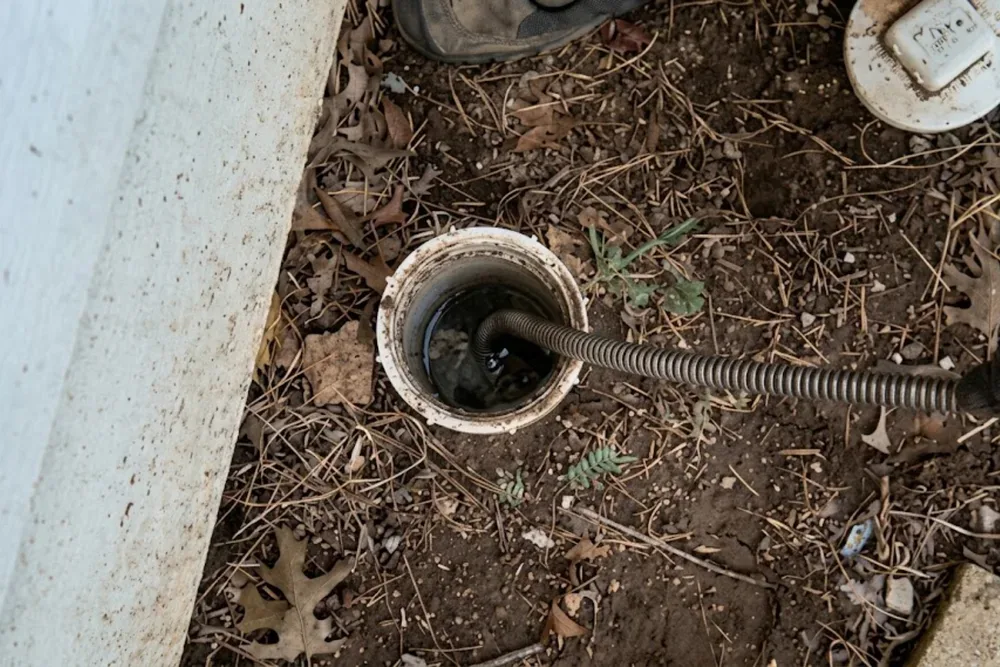
A plumber can open the line with a cable and, for a heavy coat, scour the pipe wall with high-pressure water. If the blockage reaches the main line, the work moves from drain cleaning to sewer line cleaning, and the dispatcher on our 24/7 line can book the visit.
Kitchen sink backing up with grease?
Call and a dispatcher will take your address and arrange a licensed plumber.
Fat in Stow's sewer system
Stow homes drain to the Summit County sewer, which is run by the county rather than the city. The county bills quarterly. Summit County's sewer backup page says backups caused by non-flushable items and private lateral obstructions are not a justifiable claim.
In practical terms, a fatty clog in your own lateral is usually a problem to solve through a plumber first. A plumber can tell whether the blockage is yours or in the county main. Since coconut oil hardens at cool room temperature, the cool pipes in an unheated crawl space or a basement run are where it tends to set.
Neighbors in Cuyahoga Falls and Munroe Falls face the same chemistry, because fat behaves the same everywhere. The fix is the same: keep it out of the drain.
QuestionsFat and drain questions
No. Hot water carries the oil along and the soap only breaks it into smaller droplets. Both fade before the oil reaches the county main, and the fat can cool and harden again in a cool part of the line.
Scrape it into a container and put it in the trash.
It solidifies at cool room temperature, roughly the mid-seventies Fahrenheit. In a warm kitchen it is liquid, but a drain pipe is usually cooler, so it sets there.
Small amounts add up over time. Hot water only moves the oil further down the pipe, where it will cool and coat the wall.
A disposal grinds food, but it cannot dissolve fat. Oil still goes into the drain and sets later in the line.
Oil from your skin and hair rinses off in small amounts, but heavy use, like oil-based masks and body oils, can add to soap film in shower drains. A hair catcher helps.
Slow draining, gurgling and a sour smell from the kitchen sink are common signs. If more than one fixture is slow, the fat may have reached a larger branch.
They may freshen a drain, but they will not dissolve a hardened layer of fat. A cable or high-pressure water is the reliable method for a real clog.